TIMELINE
4 Months
2 Months
ROLE
UX Desginer and Research - Technical implementation, User interview, Workshop, User survey, Analysis, Sketches, Wireframe, Prototype
TIMELINE
4 Months
ROLE
UX Desginer and Research - Technical implementation, User interview, Workshop, User survey, Analysis, Sketches, Wireframe, Prototype
OVERVIEW
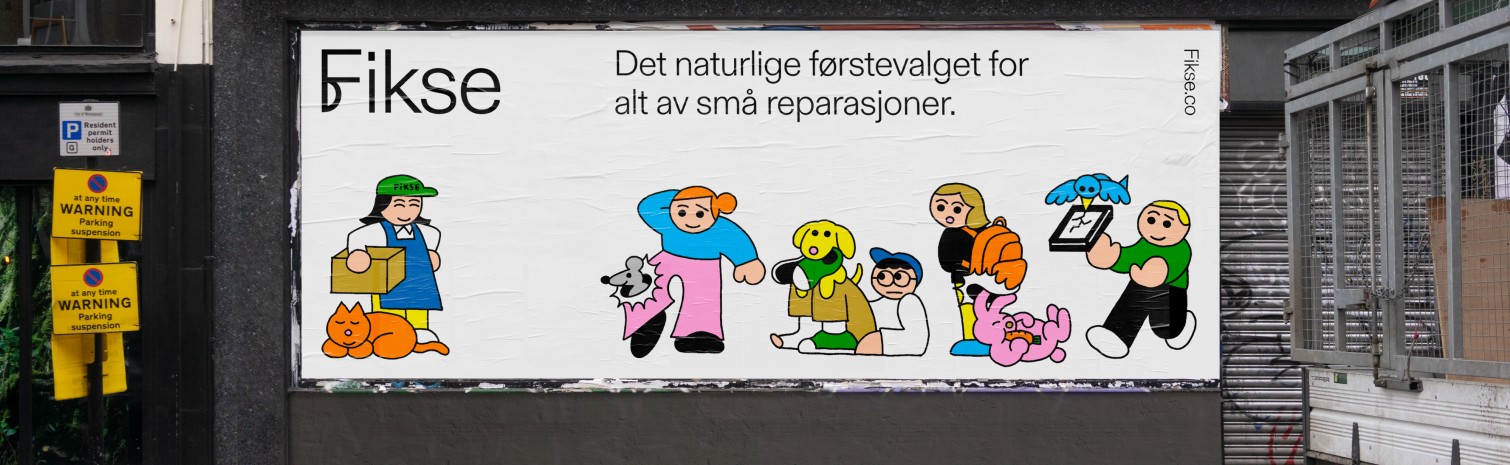
Fikse is a digital booking system for small repairs, aiming to foster a culture of easy and accessible repairs for businesses and consumers. Partnered with Høyer-gruppen and EY Doberman, Fikse is now one of Oslo's leading service tailoring companies.
2 Months
CHALLENGE
1. Users did not know or were unsure about commonly used tailor terms such as "seam" and "put in".
2. Users do not have the opportunity to communicate the problem with their garment to the tailor before delivery of the garment.
OVERVIEW
Fikse is a digital booking system for small repairs, aiming to foster a culture of easy and accessible repairs for businesses and consumers. Partnered with Høyer-gruppen and EY Doberman, Fikse is now one of Oslo's leading service tailoring companies.
CHALLENGE
1. Users did not know or were unsure about commonly used tailor terms such as "seam" and "put in".
2. Users do not have the opportunity to communicate the problem with their garment to the tailor before delivery of the garment.
PROJECT GOAL
The project was extensive, utilizing various design processes for each development phase. This case study will focus on how we simplified the user flow in the booking process by:
Making it easier for users to understand tailoring terminology.
Allowing users to communicate issues with their garments to the tailor.
The project was extensive, utilizing various design processes for each development phase. This case study will focus on how we simplified the user flow in the booking process by:
Making it easier for users to understand tailoring terminology.
Allowing users to communicate issues with their garments to the tailor.
SKILLS DEVELOPED
Figma
Wireframing
UI design for mobile and web
Prototyping
Usability testing
Research, Flows and Journey Maps
Systematic team organisation
Communication with clients, developers and POs
PROJECT GOAL
The project was extensive, utilizing various design processes for each development phase. This case study will focus on how we simplified the user flow in the booking process by:
Making it easier for users to understand tailoring terminology.
Allowing users to communicate issues with their garments to the tailor.
SKILLS DEVELOPED
Figma
Wireframing
UI design for mobile and web
Prototyping
Usability testing
Research, Flows and Journey Maps
Systematic team organisation
Communication with clients, developers and POs
00
THE SOLUTION
00
THE SOLUTION
Information design and textual description
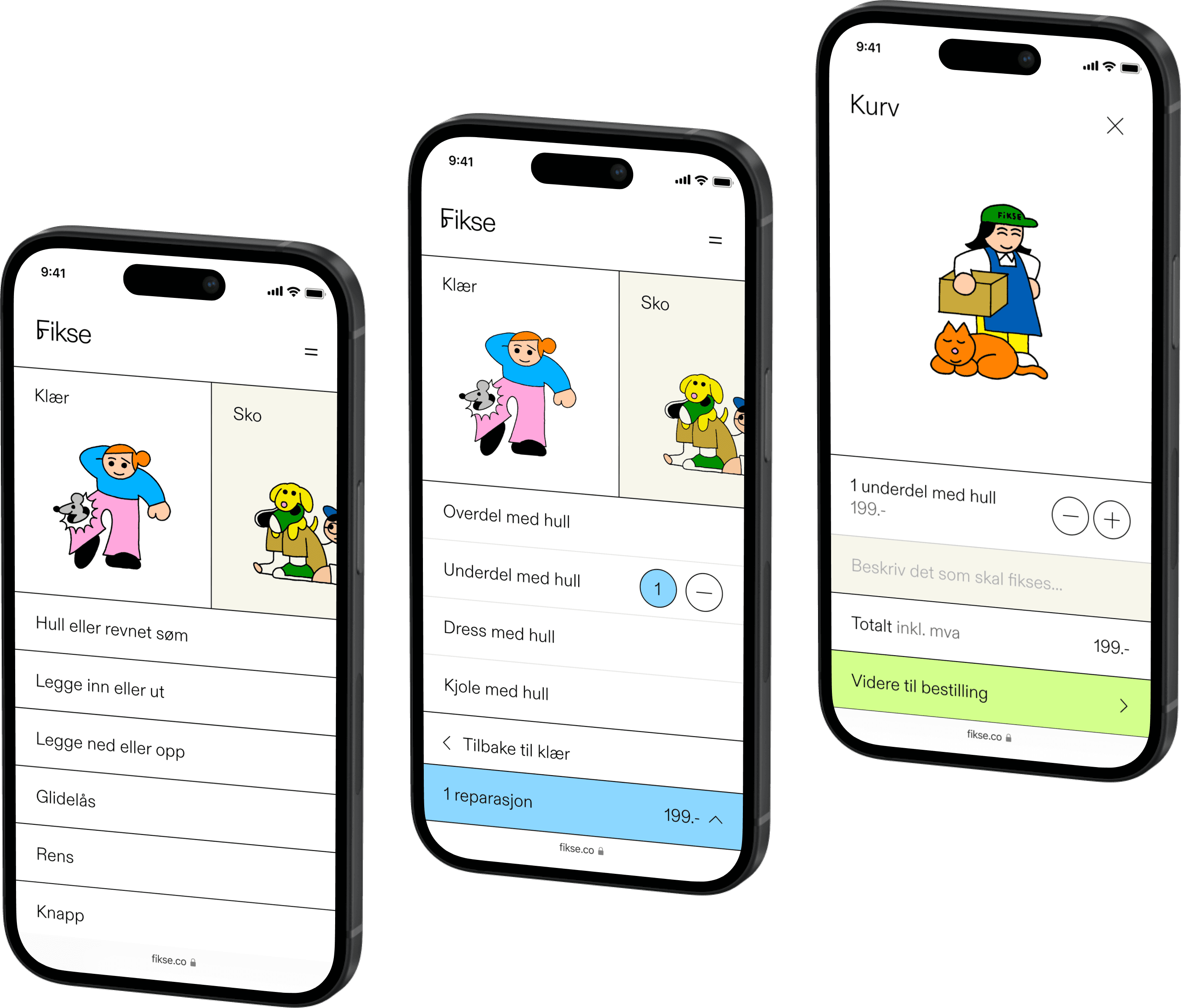
Categorize and present tailoring concepts where they correspond and relate to each other. For example, instead of having "take in," "let out," "shorten," and "lengthen" as four separate options, we presented them where the terms have correspondence and relation to each other. It became "Take in or out" and "Shorten or lengthen."
To facilitate communication between users and the tailor, we gave users the option to provide a textual description of the problem with the garment. Having a textual description is now a fundamental requirement to ensure clear communication with the tailor.
Information design and textual description
Categorize and present tailoring concepts where they correspond and relate to each other. For example, instead of having "take in," "let out," "shorten," and "lengthen" as four separate options, we presented them where the terms have correspondence and relation to each other. It became "Take in or out" and "Shorten or lengthen."
To facilitate communication between users and the tailor, we gave users the option to provide a textual description of the problem with the garment. Having a textual description is now a fundamental requirement to ensure clear communication with the tailor.
01 Research
THE DIGITAL RENAISSANCE IN TAILORING INDUSTRY
01 Research
THE DIGITAL RENAISSANCE IN TAILORING INDUSTRY
Primary Research
In this phase of our research, our aim was to deeply understand user experiences, pinpoint pain points, and uncover their unmet needs. We used tools such as Google Analytics for quantitative analysis to grasp user behaviors and preferences. Alongside this, we conducted interviews and heuristic evaluations to gain detailed insights into user perspectives.
Primary Research
In this phase of our research, our aim was to deeply understand user experiences, pinpoint pain points, and uncover their unmet needs. We used tools such as Google Analytics for quantitative analysis to grasp user behaviors and preferences. Alongside this, we conducted interviews and heuristic evaluations to gain detailed insights into user perspectives.
Knowledge gaps in tailoring among users
6 out of 10 users aged 20 to 40 had limited knowledge of common tailoring terms such as "seam" and "take in." This was especially prevalent among users aged 20 to 30. This gap in terminology and expertise hindered a smooth user experience and created confusion among the users.
Some of the common questions we received included:
"My pants have torn—should I choose 'seam' or 'tear'?"
"My shirt is too long—should I 'take it in' or 'hem' it?"
Knowledge gaps in tailoring among users
6 out of 10 users aged 20 to 40 had limited knowledge of common tailoring terms such as "seam" and "take in." This was especially prevalent among users aged 20 to 30. This gap in terminology and expertise hindered a smooth user experience and created confusion among the users.
Some of the common questions we received included:
"My pants have torn—should I choose 'seam' or 'tear'?"
"My shirt is too long—should I 'take it in' or 'hem' it?"

Improving User-Tailor Communication
The existing design restricted users to choose predefined options without the ability to input their own descriptions. Users could communicate with the tailor only during the physical delivery of their garments to the workshop.
This enhancement is critical to meeting users' needs by enabling them to clearly and effectively convey garment issues, thereby improving user engagement and communication between users and tailors.
Improving User-Tailor Communication
The existing design restricted users to choose predefined options without the ability to input their own descriptions. Users could communicate with the tailor only during the physical delivery of their garments to the workshop.
This enhancement is critical to meeting users' needs by enabling them to clearly and effectively convey garment issues, thereby improving user engagement and communication between users and tailors.
Research-intensive start
By starting with a research-intensive approach in the project's first sprint, we established a solid foundation for our work. Based on the findings and identified areas of concern in this sprint, we pinpointed two primary needs:
Users do not understand all tailoring terms.
Users want the ability to communicate their garment issues to the tailor.
Research-intensive start
By starting with a research-intensive approach in the project's first sprint, we established a solid foundation for our work. Based on the findings and identified areas of concern in this sprint, we pinpointed two primary needs:
Users do not understand all tailoring terms.
Users want the ability to communicate their garment issues to the tailor.
Secondary research
In this phase, we gathered data from user interviews, workshops, and surveys to understand users' familiarity with tailoring terminology. Findings confirmed concerns from the initial phase, revealing significant challenges with tailoring terms among users aged 20 to 30. Users stressed the need for enhanced communication with tailors, emphasizing the necessity for a more flexible interaction solution.
"My pants have ripped - should I choose 'mini repair' or 'patch'?"
Markus, 27
Anne, 42
"The hem of my dress is undone - should I go with 'patch' or 'seam'?"
"My shirt is too long in the body - should I 'take in' or 'seam'?"
Frank, 45
"I'm unsure which repair option to choose for my bag."
Petter, 38
Secondary research
In this phase, we gathered data from user interviews, workshops, and surveys to understand users' familiarity with tailoring terminology. Findings confirmed concerns from the initial phase, revealing significant challenges with tailoring terms among users aged 20 to 30. Users stressed the need for enhanced communication with tailors, emphasizing the necessity for a more flexible interaction solution.
"My pants have ripped - should I choose 'mini repair' or 'patch'?"
Markus, 27
Anne, 42
"The hem of my dress is undone - should I go with 'patch' or 'seam'?"
"My shirt is too long in the body - should I 'take in' or 'seam'?"
Frank, 45
"I'm unsure which repair option to choose for my bag."
Petter, 38
Pain points
Confusion over terminology
Overwhelming choices
Overwhelming choice of options
pre-drop-off communication
Perceived complexity of process
Inconsistent user experience
Inconsistent user experience
Causes
Limited exposure to tailoring Services
Overwhelming choice during booking
Difficulty describing garment issues
Limited pre-visit communication
Understanding tailor options
Inconsistent service experience
Solutions
Enhance clarity on tailor terminology
Improve pre-visit communications
Inconsistent user experience
Inconsistent user experience
Inconsistent user experience
Inconsistent user experience
Pain points
Confusion over terminology
Overwhelming choices
pre-drop-off communication
Perceived complexity of process
Inconsistent user experience
Inconsistent user experience
Causes
Limited exposure to tailoring Services
Overwhelming choice during booking
Difficulty describing garment issues
Limited pre-visit communication
Understanding tailor options
Inconsistent service experience
Solutions
Enhance clarity on tailor terminology
Improve pre-visit communications
Inconsistent user experience
Inconsistent user experience
Inconsistent user experience
Inconsistent user experience
02 Target audience
UNDERSTANDING OUR USER BASE
02 Target audience
UNDERSTANDING OUR USER BASE
User persona: Frank

Frank
Salesperson
Age
35
Age
35
Location
Oslo, Norway
Location
Oslo, Norway
Education
Master
Education
Master
Position
Marketing
Position
Marketing
Extrovert
Extrovert
Resilient
Resilient
Articulate
Articulate
Persistent
Persistent
Motivation
Frank needs to ensure his suits are always perfectly tailored and in top condition to maintain a sharp, professional image in front of clients and colleagues. With his busy schedule, Frank values the convenience of Fikse’s online booking and home pickup/delivery services, which save him time and effort.
Needs
Frank aims to consistently present himself in professional suits to project confidence and professionalism in his sales role.
He seeks efficient and convenient tailoring solutions that fit seamlessly into his busy schedule, allowing him to focus more on his sales responsibilities.
Frank aims to grasp the meaning and usage of common tailor terminology to communicate effectively with tailors.
Frustrations
Difficulty in effectively communicating his specific tailoring needs and preferences to tailors, resulting in misunderstandings and unsatisfactory outcomes.
He struggles to articulate his specific preferences or requirements for alterations, resulting in outcomes that may not align with his expectations.
Frank finds it frustrating to navigate and understand the specialized terms used by tailors, which can lead to misunderstandings and confusion.
User persona: Frank
Frank
Salesperson
Age
35
Location
Oslo, Norway
Education
Master
Position
Marketing
Extrovert
Resilient
Articulate
Persistent
Motivation
Frank needs to ensure his suits are always perfectly tailored and in top condition to maintain a sharp, professional image in front of clients and colleagues. With his busy schedule, Frank values the convenience of Fikse’s online booking and home pickup/delivery services, which save him time and effort.
Needs
Frank aims to consistently present himself in professional suits to project confidence and professionalism in his sales role.
He seeks efficient and convenient tailoring solutions that fit seamlessly into his busy schedule, allowing him to focus more on his sales responsibilities.
Frank aims to grasp the meaning and usage of common tailor terminology to communicate effectively with tailors.
Frustrations
Difficulty in effectively communicating his specific tailoring needs and preferences to tailors, resulting in misunderstandings and unsatisfactory outcomes.
He struggles to articulate his specific preferences or requirements for alterations, resulting in outcomes that may not align with his expectations.
Frank finds it frustrating to navigate and understand the specialized terms used by tailors, which can lead to misunderstandings and confusion.
User persona: Markus

Markus
Lawyer
Age
28
Age
28
Location
Oslo, Norway
Location
Oslo, Norway
Education
Master
Education
Master
Position
Criminal defense
Position
Criminal defense
Creativity
Passion
Drive
Drive
Persistent
Persistent
Motivation
Markus is alawyer working at a prestigious law firm in Oslo. Despite his hectic work life, Markus values appearance and professionalism, believing that a well-tailored suit reflects his competence and attention to detail. Outside of work, Markus is an avid hiker who enjoys exploring Norway's natural landscapes on weekends. His hiking clothes often get damaged due to the rugged terrain, and he needs reliable repair services to keep his gear in top condition.
Needs
Markus wants a quick and straightforward way to book tailoring and repair services without having to visit the shop multiple times.
As an outdoor enthusiast, Markus needs his hiking gear to be in excellent condition. He seeks reliable repair services to fix rips and damages quickly, ensuring his gear is ready for his next adventure.
Frustrations
Markus often feels unsure about tailoring terms like "take in" or "hem." He worries that this lack of knowledge might lead to mistakes in his service requests.
With his busy schedule, Markus finds it difficult to find time to visit a tailor. He needs a service that fits seamlessly into his routine.
User persona: Markus
Markus
Lawyer
Age
28
Location
Oslo, Norway
Education
Master
Position
Criminal defense
Creativity
Passion
Drive
Persistent
Motivation
Markus is alawyer working at a prestigious law firm in Oslo. Despite his hectic work life, Markus values appearance and professionalism, believing that a well-tailored suit reflects his competence and attention to detail. Outside of work, Markus is an avid hiker who enjoys exploring Norway's natural landscapes on weekends. His hiking clothes often get damaged due to the rugged terrain, and he needs reliable repair services to keep his gear in top condition.
Needs
Markus wants a quick and straightforward way to book tailoring and repair services without having to visit the shop multiple times.
As an outdoor enthusiast, Markus needs his hiking gear to be in excellent condition. He seeks reliable repair services to fix rips and damages quickly, ensuring his gear is ready for his next adventure.
Frustrations
Markus often feels unsure about tailoring terms like "take in" or "hem." He worries that this lack of knowledge might lead to mistakes in his service requests.
With his busy schedule, Markus finds it difficult to find time to visit a tailor. He needs a service that fits seamlessly into his routine.
NEEDS
Clear tailoring terminology
pre-delivery communication for users and tailors
Easy booking process
Transparent and clear information design
Flexible communication channels
FRUSTRATIONS
Unclear tailoring terminology
Lack of pre-delivery communication
Complex booking system
Overwhelming choice
Ineffective communication options
NEEDS
Clear tailoring terminology
pre-delivery communication
Easy booking process
Transparent and clear information design
Flexible communication channels
FRUSTRATIONS
Unclear tailoring terminology
Lack of pre-delivery communication
Complex booking system
Overwhelming choice
Ineffective communication options
03 The design process
FROM SKETCH TO SCREEN
03 The design process
FROM SKETCH TO SCREEN
User persona: Marie

Marie
Real Estate Agent
Age
32
Age
32
Location
Oslo, Norway
Location
Oslo, Norway
Education
Master
Education
Master
Position
Specialist
Position
Specialist
Extrovert
Extrovert
Adaptable
Adaptable
Resilient
Resilient
Passion
Passion
Motivation
Anne wants to make a positive impression on clients and colleagues by ensuring her clothes are always in top condition. She aims to save time and avoid misunderstandings by clearly communicating her needs to tailors. Anne seeks to enhance her professional image through well-maintained and properly fitted clothing.
Needs
Ensure her clothing is always in top condition to maintain a polished and professional image in front of clients and colleagues.
Quickly and efficiently resolve clothing issues without spending excessive time researching or explaining problems.
Gain confidence in choosing the appropriate services for her clothing repairs and alterations.
Frustrations
Struggles with understanding the complex and specialized terms used by tailors.
Experiences frequent misunderstandings with tailors due to her lack of knowledge about tailoring terms.
Feels frustrated when repairs or alterations do not meet her expectations, often due to her inability to clearly convey her needs.
Gets overwhelmed by the numerous options and choices available for garment repairs and alterations, leading to indecision
User persona: Marie
Marie
Real Estate Agent
Age
32
Location
Oslo, Norway
Education
Master
Position
Specialist
Extrovert
Adaptable
Resilient
Passion
Motivation
Anne wants to make a positive impression on clients and colleagues by ensuring her clothes are always in top condition. She aims to save time and avoid misunderstandings by clearly communicating her needs to tailors. Anne seeks to enhance her professional image through well-maintained and properly fitted clothing.
Needs
Ensure her clothing is always in top condition to maintain a polished and professional image in front of clients and colleagues.
Quickly and efficiently resolve clothing issues without spending excessive time researching or explaining problems.
Gain confidence in choosing the appropriate services for her clothing repairs and alterations.
Frustrations
Struggles with understanding the complex and specialized terms used by tailors.
Experiences frequent misunderstandings with tailors due to her lack of knowledge about tailoring terms.
Feels frustrated when repairs or alterations do not meet her expectations, often due to her inability to clearly convey her needs.
Gets overwhelmed by the numerous options and choices available for garment repairs and alterations, leading to indecision
User journey: Marie
Scenario
Marie, a real estate agent, recently noticed a tear in her favorite blazer just before a crucial client meeting. Aware of Fikse's reputation for reliable tailoring services, she decides to use their online platform. As a busy person, she needs confirmation about her garment repair details before proceeding with payment and sending the garment by mail or visiting the tailor. However, the only option available is to physically go to the tailor's shop without being able to communicate beforehand.
Expectations
Marie expects clear explanations of tailor terms and options on the Fikse platform to confidently choose her repairs.
She anticipates clear and efficient communication with tailors to ensure accurate and satisfactory repairs for her garments.
Pain points
Difficulty understanding specialized tailor terms could lead to confusion and uncertainty when selecting repair options.
Feeling overwhelmed by numerous repair choices on the Fikse platform may hinder her ability to confidently decide on the best option.
Difficulty in effectively communicating her specific garment repair needs to tailors due to unfamiliarity with tailor terminology.
Marie faced difficulty in contacting the tailor beforehand to discuss her repair needs
Opportunities
Fikse can benefit from simplifying and explaining common tailor terms, helping users become more confident in communicating with tailors and understanding what repair option to choose.
Fikse can enhance their services by providing clear online communication options for users to discuss repair details and confirmations before visiting.
User journey: Marie
Scenario
Marie, a real estate agent, recently noticed a tear in her favorite blazer just before a crucial client meeting. Aware of Fikse's reputation for reliable tailoring services, she decides to use their online platform. As a busy person, she needs confirmation about her garment repair details before proceeding with payment and sending the garment by mail or visiting the tailor. However, the only option available is to physically go to the tailor's shop without being able to communicate beforehand.
Expectations
Marie expects clear explanations of tailor terms and options on the Fikse platform to confidently choose her repairs.
She anticipates clear and efficient communication with tailors to ensure accurate and satisfactory repairs for her garments.
Pain points
Difficulty understanding specialized tailor terms could lead to confusion and uncertainty when selecting repair options.
Feeling overwhelmed by numerous repair choices on the Fikse platform may hinder her ability to confidently decide on the best option.
Difficulty in effectively communicating her specific garment repair needs to tailors due to unfamiliarity with tailor terminology.
Marie faced difficulty in contacting the tailor beforehand to discuss her repair needs
Opportunities
Fikse can benefit from simplifying and explaining common tailor terms, helping users become more confident in communicating with tailors and understanding what repair option to choose.
Fikse can enhance their services by providing clear online communication options for users to discuss repair details and confirmations before visiting.
Discovery of issue
Discovery of issue
Marie, a real estate agent, recently noticed a tear in her favorite blazer just before a crucial client meeting. Aware of Fikse's reputation for reliable tailoring services, she decides to use their online platform for convenience.
Marie, a real estate agent, recently noticed a tear in her favorite blazer just before a crucial client meeting. Aware of Fikse's reputation for reliable tailoring services, she decides to use their online platform for convenience.
Choose repair option
Choose repair option
She visits the Fikse platform to choose a repair service option but hesitates. She's unsure about the appropriate repair service for her issue. Feeling a bit frustrated, she navigates through the repair types: 'sewing' versus 'patching'. She knows the tear needs fixing but isn't sure which option would be best.
Marie pondered her decision for a few minutes and settled on 'patching'. However, in the back of her mind, she remained unsure if she had chosen the right option and was concerned about how this might affect the cost or other factors.
She visits the Fikse platform to choose a repair service option but hesitates. She's unsure about the appropriate repair service for her issue. Feeling a bit frustrated, she navigates through the repair types: 'sewing' versus 'patching'. She knows the tear needs fixing but isn't sure which option would be best.
Marie pondered her decision for a few minutes and settled on 'patching'. However, in the back of her mind, she remained unsure if she had chosen the right option and was concerned about how this might affect the cost or other factors.
Communicate repair
Communicate repair
Marie's favorite blazer has a complex tear on the shoulder, and the right arm is nearly detached. Uncertain how to accurately describe her issue in the booking flow, she wonders, "Will this take longer to repair than a normal tear?" and "Will this cost more?"
Marie's favorite blazer has a complex tear on the shoulder, and the right arm is nearly detached. Uncertain how to accurately describe her issue in the booking flow, she wonders, "Will this take longer to repair than a normal tear?" and "Will this cost more?"
Uncertainty
Uncertainty
Marie hesitates because she prefers to confirm the repair specifics, such as whether stitching or patching is needed, the repair time, and the estimated cost before visiting the tailor. She also wants to clearly communicate the issue beforehand. At the end of the booking flow, she can choose to send the blazer in the mail or deliver it to the tailor in person. Being a busy person, she prefers to send it by mail, but she needs assurance and wants to communicate with the tailor before paying.
Marie hesitates because she prefers to confirm the repair specifics, such as whether stitching or patching is needed, the repair time, and the estimated cost before visiting the tailor. She also wants to clearly communicate the issue beforehand. At the end of the booking flow, she can choose to send the blazer in the mail or deliver it to the tailor in person. Being a busy person, she prefers to send it by mail, but she needs assurance and wants to communicate with the tailor before paying.
Limited options
Limited options
After thinking it over, Marie decides to visit the nearest Fikse tailor in person to discuss the repair details, opting not to make an online booking and paying.
After thinking it over, Marie decides to visit the nearest Fikse tailor in person to discuss the repair details, opting not to make an online booking and paying.
Resolution, but a complicated process
Resolution, but a complicated process
At the tailor's shop, Marie explains her repair needs clearly, receives confirmation on the repair method and cost, and schedules the drop-off, ensuring her dress will be ready in time for the event.
The goal is for Marie to utilize the Fikse platform for online booking and payment, then either send the blazer via package mail or visit the tailor for drop-off.
Marie didn't use the Fikse platform and send the blazer as initially planned, she opted to visit the tailor to pay and communicate her issue instead. Thus she needed to make more effort and work, making the process more complicated.
At the tailor's shop, Marie explains her repair needs clearly, receives confirmation on the repair method and cost, and schedules the drop-off, ensuring her dress will be ready in time for the event.
The goal is for Marie to utilize the Fikse platform for online booking and payment, then either send the blazer via package mail or visit the tailor for drop-off.
Marie didn't use the Fikse platform and send the blazer as initially planned, she opted to visit the tailor to pay and communicate her issue instead. Thus she needed to make more effort and work, making the process more complicated.
Freedom to come up with lots of ideas
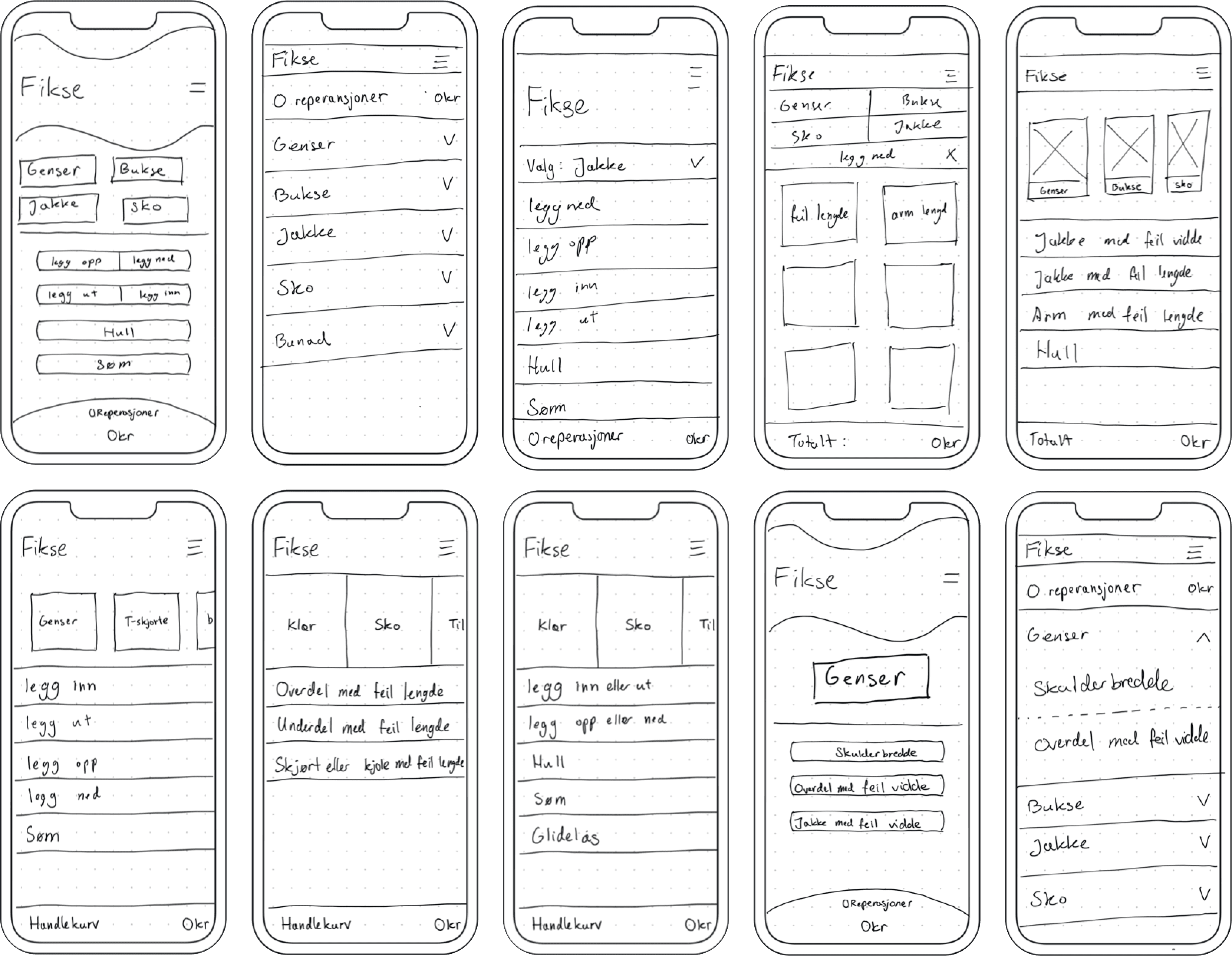
In this phase, the design team generated diverse ideas, sketches, and prototypes based on previous insights and data. They emphasized creative diversity, avoiding tunnel vision by not limiting themselves to one or two ideas. The principle was 'More is more,' encouraging all team members to contribute ideas without early criticism.
By using this approach and various creative techniques, the team generated a broad range of ideas that could be mixed and matched to best meet user needs. Techniques included:
-Crazy 8: 8 concepts were generated in just 8 minutes, forcing the team to think quickly and creatively.
-Time Constraints: Each concept was given a strict time limit. This helped increase efficiency and encouraged quick decision-making.
-Targeted Goals: The team set daily concept generation targets, promoting continuous and structured idea production.
This approach led to a higher-quality prototype, informed by diverse ideas and better suited to user needs and requirements.
Freedom to come up with lots of ideas
In this phase, the design team generated diverse ideas, sketches, and prototypes based on previous insights and data. They emphasized creative diversity, avoiding tunnel vision by not limiting themselves to one or two ideas. The principle was 'More is more,' encouraging all team members to contribute ideas without early criticism.
By using this approach and various creative techniques, the team generated a broad range of ideas that could be mixed and matched to best meet user needs. Techniques included:
-Crazy 8: 8 concepts were generated in just 8 minutes, forcing the team to think quickly and creatively.
-Time Constraints: Each concept was given a strict time limit. This helped increase efficiency and encouraged quick decision-making.
-Targeted Goals: The team set daily concept generation targets, promoting continuous and structured idea production.
This approach led to a higher-quality prototype, informed by diverse ideas and better suited to user needs and requirements.
Prototypes and wireframes
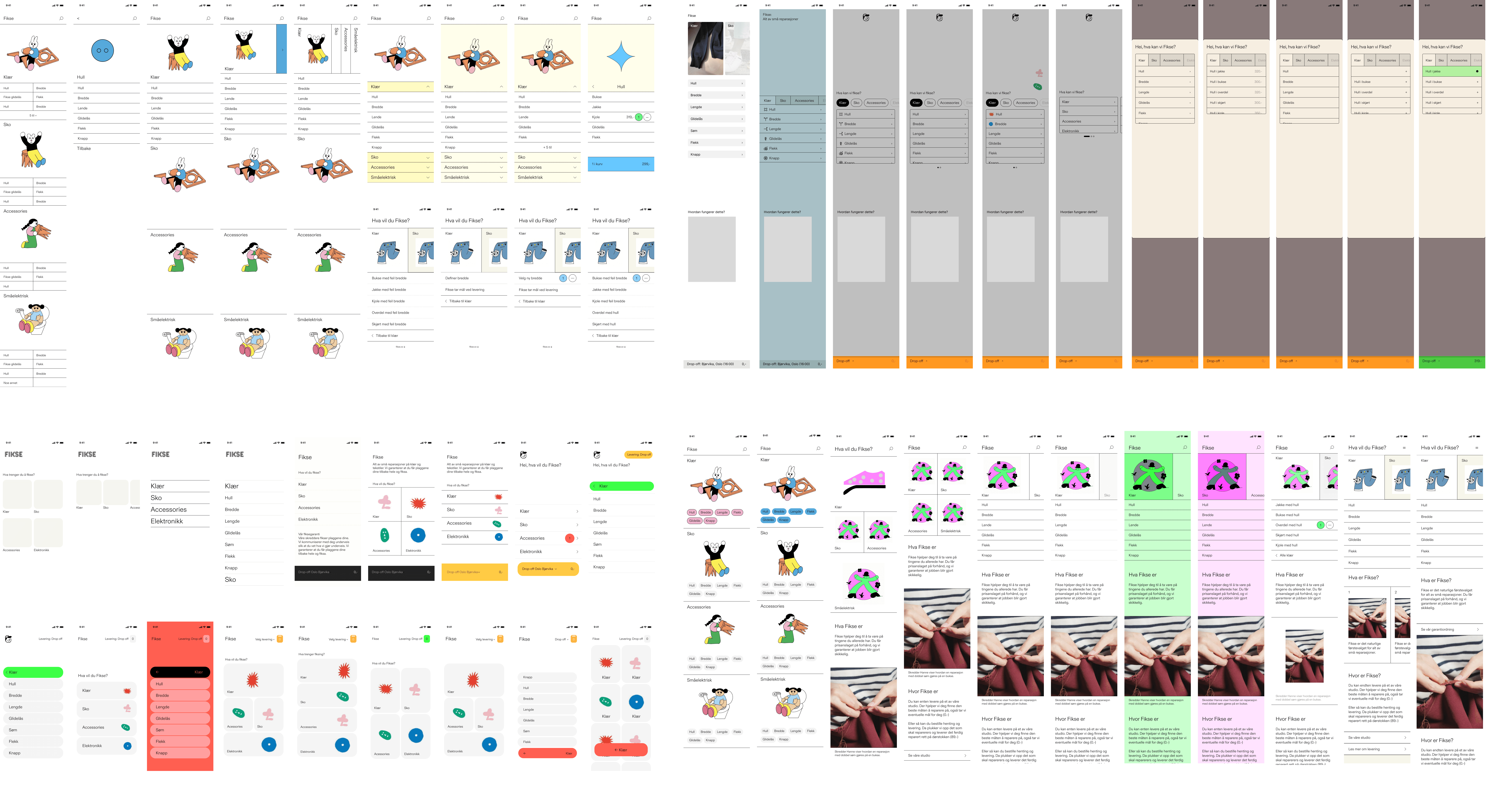
After brainstorming and discussions, the design team created prototypes from the best concepts, transforming them into wireframes to visualize the user experience. During this phase, we conducted extensive user testing to evaluate these wireframes.
After testing, we found that users still struggled with tailoring terms and choosing the right tasks. This led us to another round of ideation and sketch development. Despite this challenge, we successfully developed a method for users to communicate their garment issues to the tailor more effectively.
This approach contributed to an iterative process where the team continuously adjusted the design to address users' concerns and ensure a more efficient and user-friendly solution.
Prototypes and wireframes
After brainstorming and discussions, the design team created prototypes from the best concepts, transforming them into wireframes to visualize the user experience. During this phase, we conducted extensive user testing to evaluate these wireframes.
After testing, we found that users still struggled with tailoring terms and choosing the right tasks. This led us to another round of ideation and sketch development. Despite this challenge, we successfully developed a method for users to communicate their garment issues to the tailor more effectively.
This approach contributed to an iterative process where the team continuously adjusted the design to address users' concerns and ensure a more efficient and user-friendly solution.

Involve users more
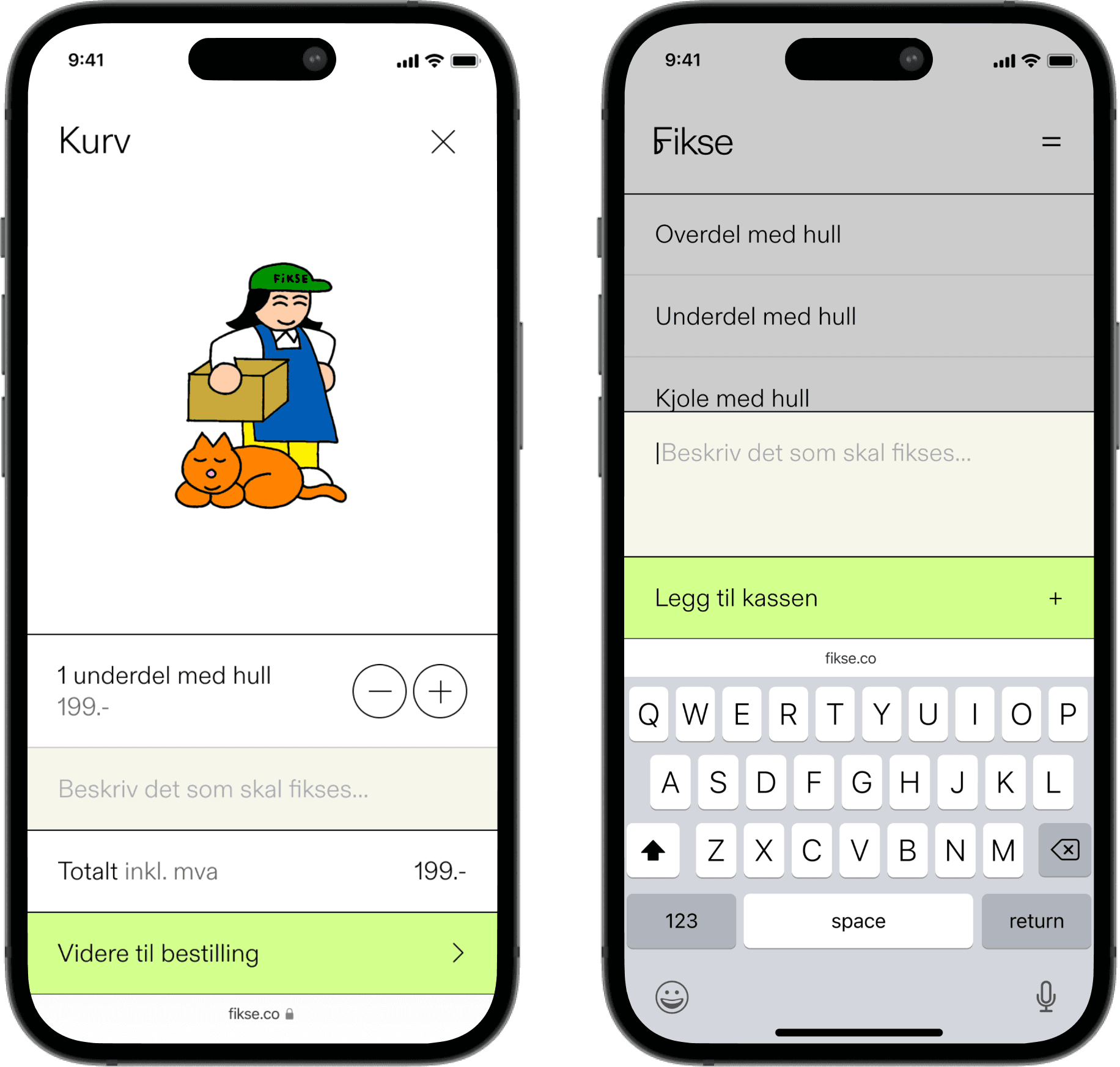
During this phase we included users in deciding their preferred communication method with the tailor. Designers developed three proposals, and user feedback determined the most favored approach. Insights were gathered from user interviews, workshops, and surveys.
1. Adding a picture or video (22% of users)
2. Booking a video consultation before payment and sending/delivering the garment (11% of users)
3. Text description (67% of users)
Based on these results, we decided to prioritize the text description as the primary way for users to communicate with the tailor. This ensured that the user experience aligned with the most prevalent preferences and needs of our users.
Involve users more
During this phase we included users in deciding their preferred communication method with the tailor. Designers developed three proposals, and user feedback determined the most favored approach. Insights were gathered from user interviews, workshops, and surveys.
1. Adding a picture or video (22% of users)
2. Booking a video consultation before payment and sending/delivering the garment (11% of users)
3. Text description (67% of users)
Based on these results, we decided to prioritize the text description as the primary way for users to communicate with the tailor. This ensured that the user experience aligned with the most prevalent preferences and needs of our users.
Involve domain experts more
After receiving user feedback indicating confusion with tailor terminology, the design team prioritized collaboration with domain experts. Previous time conflicts limited this involvement. However, with prototypes not meeting user expectations, understanding tailoring terminology became critical.
Therefore, we focused on arranging workshops and interviews with experienced tailors to develop a systematic approach for presenting information, particularly tailor terminology. Drawing on insights from experts, we categorized the terminology to make it more accessible and understandable for our users. This approach led to a more efficient and user-friendly solution tailored to their needs.
Involve domain experts more
After receiving user feedback indicating confusion with tailor terminology, the design team prioritized collaboration with domain experts. Previous time conflicts limited this involvement. However, with prototypes not meeting user expectations, understanding tailoring terminology became critical.
Therefore, we focused on arranging workshops and interviews with experienced tailors to develop a systematic approach for presenting information, particularly tailor terminology. Drawing on insights from experts, we categorized the terminology to make it more accessible and understandable for our users. This approach led to a more efficient and user-friendly solution tailored to their needs.

Information design
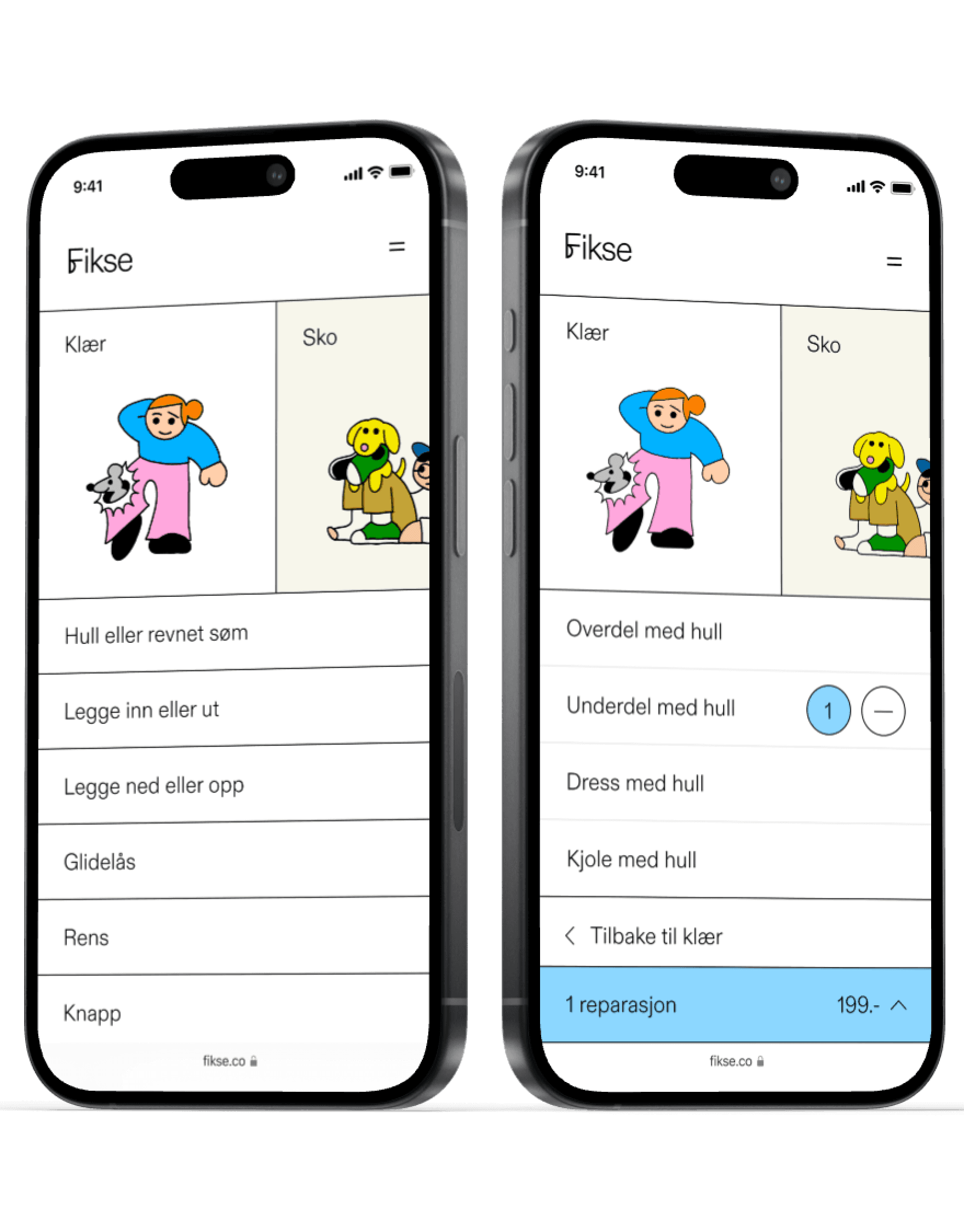
In our workshops and user collaborations, we faced a challenge: helping users find improved alternatives for tailor terms was complex. Through multiple workshop iterations and interviews with users and domain experts, we realized a key issue: the presentation and categorization of information significantly hindered user understanding of the terms.
Instead of keeping terms like "take in" "let out" "shorten" and "lengthen" as four separate options, we took a step back. We decided to restructure the terminology by categorizing them where they naturally fit together, resulting in "take in or out" and "shorten or lengthen". This organized approach was also applied to other tailor terms.
Our key insight was to provide users with fewer options to minimize 'information overload,' making it easier for them to understand and choose the correct tailoring action.
Information design
In our workshops and user collaborations, we faced a challenge: helping users find improved alternatives for tailor terms was complex. Through multiple workshop iterations and interviews with users and domain experts, we realized a key issue: the presentation and categorization of information significantly hindered user understanding of the terms.
Instead of keeping terms like "take in" "let out" "shorten" and "lengthen" as four separate options, we took a step back. We decided to restructure the terminology by categorizing them where they naturally fit together, resulting in "take in or out" and "shorten or lengthen". This organized approach was also applied to other tailor terms.
Our key insight was to provide users with fewer options to minimize 'information overload,' making it easier for them to understand and choose the correct tailoring action.
04 Reflection
Learning from the past to shape the future
04 Reflection
Learning from the past to shape the future
Learning from the experience
As part-time designers, and also students, we initially felt a power imbalance with the full-time designers and experienced impostor syndrome. However, this was overcome by encouraging open communication and inviting part-time designers to share their opinions without fear.
Involving domain experts earlier in the design process and sprints. In our case, this involved including tailors in user interviews and workshops. We had tunnel vision by focusing all resources solely on users. Involving a tailor provided answers to questions users couldn't answer and allowed us to see the bigger picture.
Documentation improvement: We took more photos to capture the work in progress, including the board covered in workshop sticky notes and other relevant moments. These photos were crucial for tracking our process and sharing insights within the team.
Learning from the experience
As part-time designers, and also students, we initially felt a power imbalance with the full-time designers and experienced impostor syndrome. However, this was overcome by encouraging open communication and inviting part-time designers to share their opinions without fear.
Involving domain experts earlier in the design process and sprints. In our case, this involved including tailors in user interviews and workshops. We had tunnel vision by focusing all resources solely on users. Involving a tailor provided answers to questions users couldn't answer and allowed us to see the bigger picture.
Documentation improvement: We took more photos to capture the work in progress, including the board covered in workshop sticky notes and other relevant moments. These photos were crucial for tracking our process and sharing insights within the team.
05 Successful launch
Increase in platform usage and partnerships
05 Successful launch
Increase in platform usage and partnerships
The impact of design
After Fikse launched the final product, we saw a notable 60% increase in platform usage, showing a significant rise in user engagement. We processed over 700 orders in the months post-launch, signaling a positive market response. Moreover, we onboarded 19 new store partners and formed 8 repair partnerships in Oslo, underscoring increasing interest and trust from local businesses.
The impact of design
After Fikse launched the final product, we saw a notable 60% increase in platform usage, showing a significant rise in user engagement. We processed over 700 orders in the months post-launch, signaling a positive market response. Moreover, we onboarded 19 new store partners and formed 8 repair partnerships in Oslo, underscoring increasing interest and trust from local businesses.
DIP AWARDS
Fikse, in collaboration with EY Doberman received the DIP Award from DOGA for design and innovation. The Design-Driven Innovation Program (DIP) promotes socially beneficial innovation through design methodology in project ideation. The jury highlighted Fikse as a potential solution for sustainability challenges in the clothing industry, particularly beneficial for small businesses.
The jury writes:
"By developing a solution that potentially contributes to more jobs within the circular economy in general and the tailoring profession in particular, the project will benefit the larger community"
DIP AWARDS
Fikse, in collaboration with EY Doberman received the DIP Award from DOGA for design and innovation. The Design-Driven Innovation Program (DIP) promotes socially beneficial innovation through design methodology in project ideation. The jury highlighted Fikse as a potential solution for sustainability challenges in the clothing industry, particularly beneficial for small businesses.
The jury writes:
"By developing a solution that potentially contributes to more jobs within the circular economy in general and the tailoring profession in particular, the project will benefit the larger community"
RED DOT DESIGN AWARDS
In collaboration with EY Doberman, Fikse won a Red Dot Design Award in Brand Design. The award, recognized internationally, celebrates excellence in product design, brand and communication design, and design concepts. Judged annually by experts, the Red Dot is a prestigious accolade highlighting outstanding achievements in design and business.
RED DOT DESIGN AWARDS
In collaboration with EY Doberman, Fikse won a Red Dot Design Award in Brand Design. The award, recognized internationally, celebrates excellence in product design, brand and communication design, and design concepts. Judged annually by experts, the Red Dot is a prestigious accolade highlighting outstanding achievements in design and business.
DEEZEN AWARDS
In collaboration with EY Doberman and Momoe Narazaki, we won a Dezeen Award 2023 for graphic design excellence on our Fikse platform. The Dezeen Award celebrates outstanding achievements in design across various categories, judged by industry experts annually.
"The fashion and textile industry accounts for 10% of global carbon emissions," said EY Doberman. "To reduce its environmental impact, we need a change in consumer attitude, as well as new technical solutions."
DEEZEN AWARDS
In collaboration with EY Doberman and Momoe Narazaki, we won a Dezeen Award 2023 for graphic design excellence on our Fikse platform. The Dezeen Award celebrates outstanding achievements in design across various categories, judged by industry experts annually.
"The fashion and textile industry accounts for 10% of global carbon emissions," said EY Doberman. "To reduce its environmental impact, we need a change in consumer attitude, as well as new technical solutions."
TISE AWARDS
Fikse is deeply grateful and honored to be named a finalist in the Brand of the Year category at the Tise Awards 2024.
TISE AWARDS
Fikse is deeply grateful and honored to be named a finalist in the Brand of the Year category at the Tise Awards 2024.
06 Future for Fikse
What's Next?
06 Future for Fikse
What's Next?
Digital tailoring with technology
Completing the design research for Fikse marks a significant milestone, setting the stage for our digital tailor service's future. As we conclude this phase, Fikse is ready for continuous evolution, guided by user insights, technology advancements, and sustainability practices. This ensures Fikse remains a leader in user-friendly repair services, closely aligned with user needs and industry trends.
With the foundational elements of our digital booking system in place, our next steps focus on expanding and enhancing various aspects of Fikse:
Multi-Modal Communication: Explore integrating additional communication channels such as video consultations or instant messaging to provide users with more flexible options to interact with tailors.
Visual Documentation: Develop tools to allow users to upload images or videos of their garments, facilitating clearer communication of repair requirements.
User-Centric Design: Conduct regular accessibility audits and user testing sessions to identify and address barriers faced by different user groups.
Digital tailoring with technology
Completing the design research for Fikse marks a significant milestone, setting the stage for our digital tailor service's future. As we conclude this phase, Fikse is ready for continuous evolution, guided by user insights, technology advancements, and sustainability practices. This ensures Fikse remains a leader in user-friendly repair services, closely aligned with user needs and industry trends.
With the foundational elements of our digital booking system in place, our next steps focus on expanding and enhancing various aspects of Fikse:
Multi-Modal Communication: Explore integrating additional communication channels such as video consultations or instant messaging to provide users with more flexible options to interact with tailors.
Visual Documentation: Develop tools to allow users to upload images or videos of their garments, facilitating clearer communication of repair requirements.
User-Centric Design: Conduct regular accessibility audits and user testing sessions to identify and address barriers faced by different user groups.
OTHER PROJECTS
OTHER PROJECTS