Background
Fikse connects users with skilled repair professionals and forwards bookings to our network of third-party experts, expanding their client base.
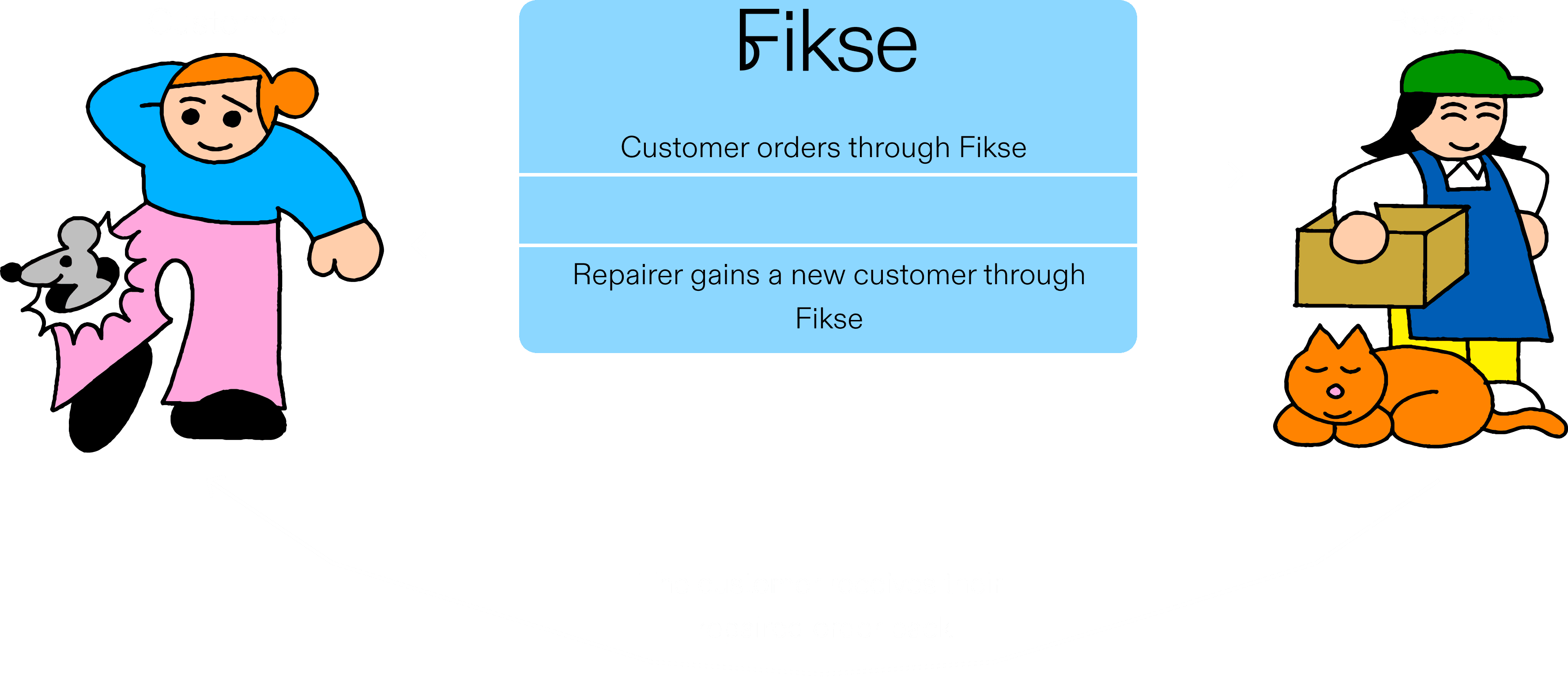
Challenge

Project Goals
Business Goal
User Goal
Design Principles
Based on the insights gained from discovery phase, I set three design principles for the newly optimized billing portal.
Solution
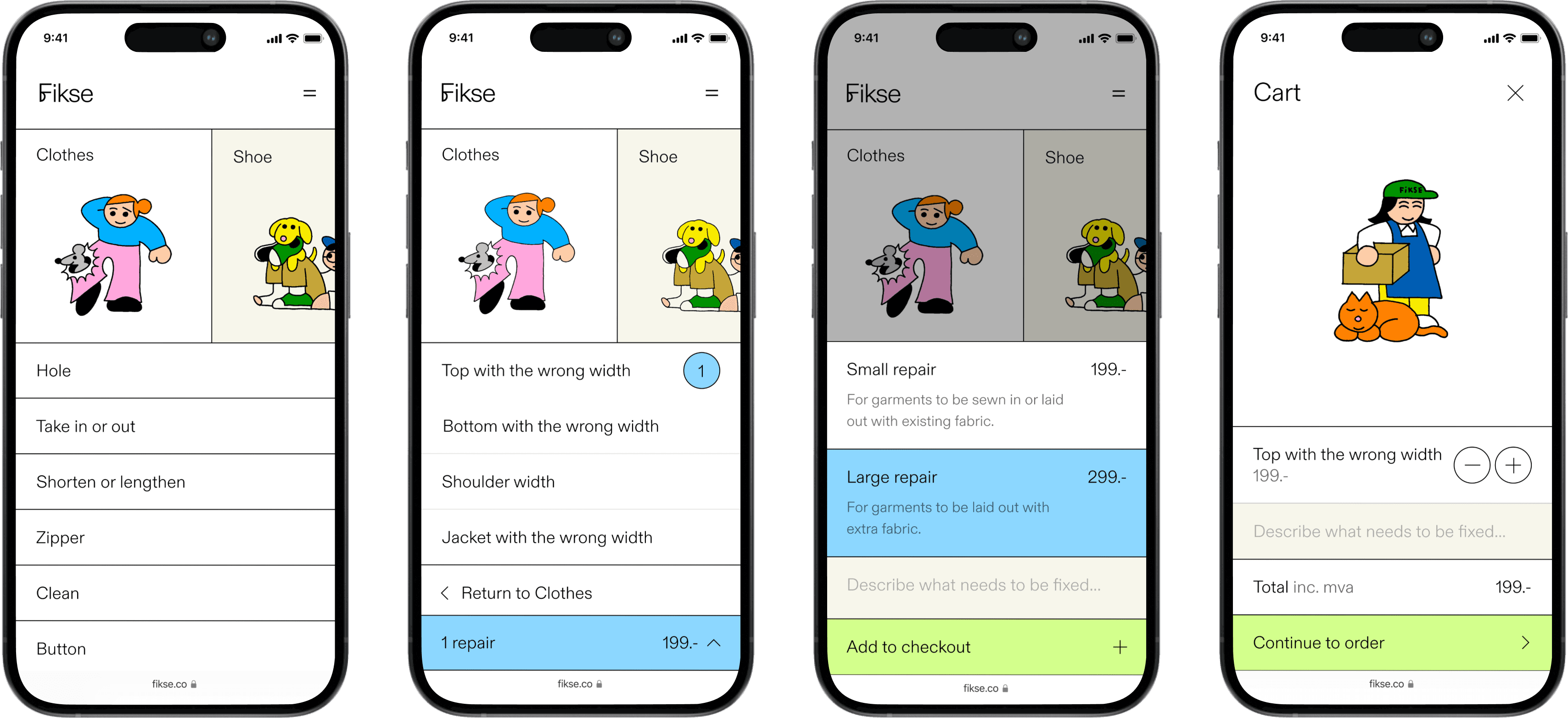
Enhanced information design
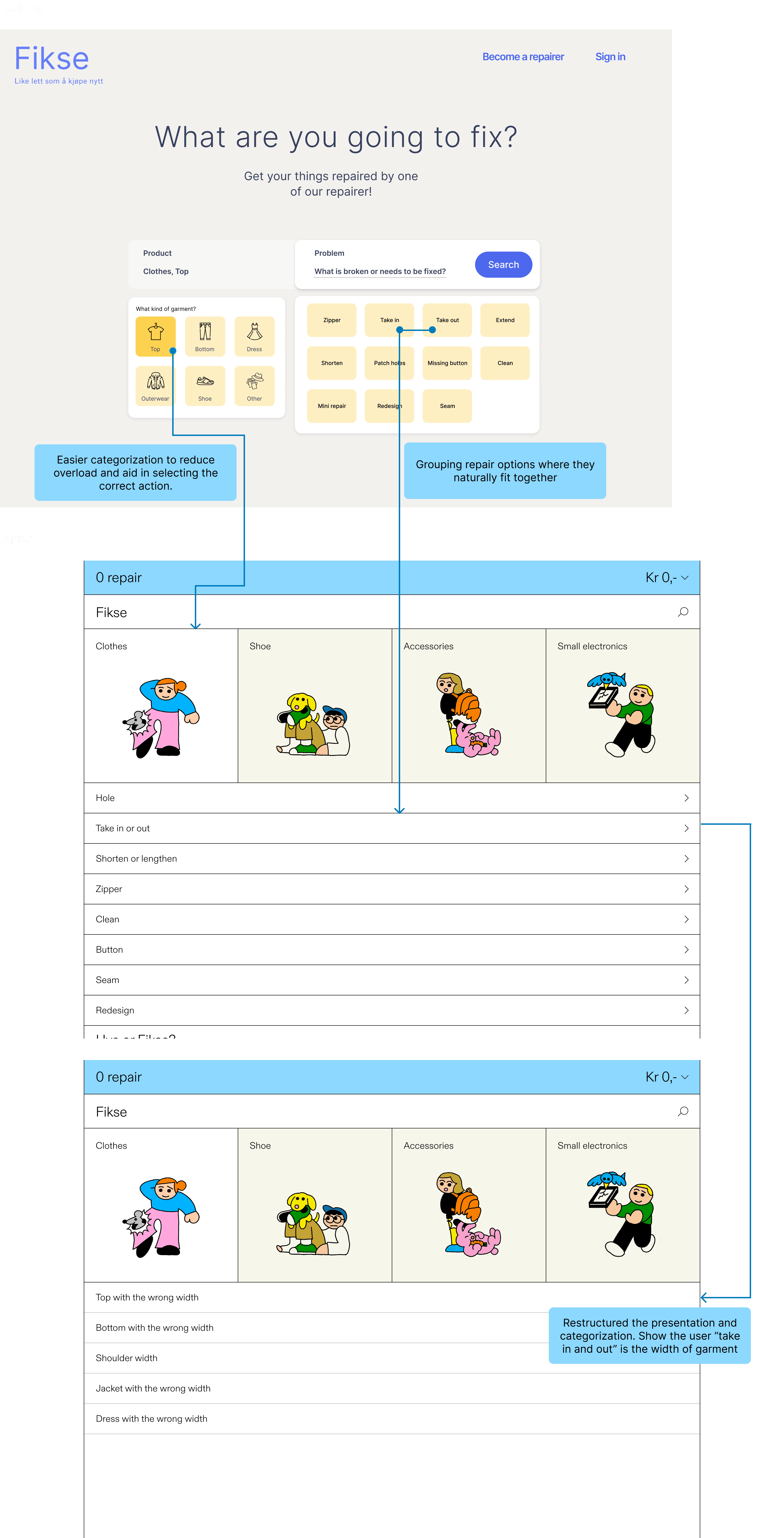
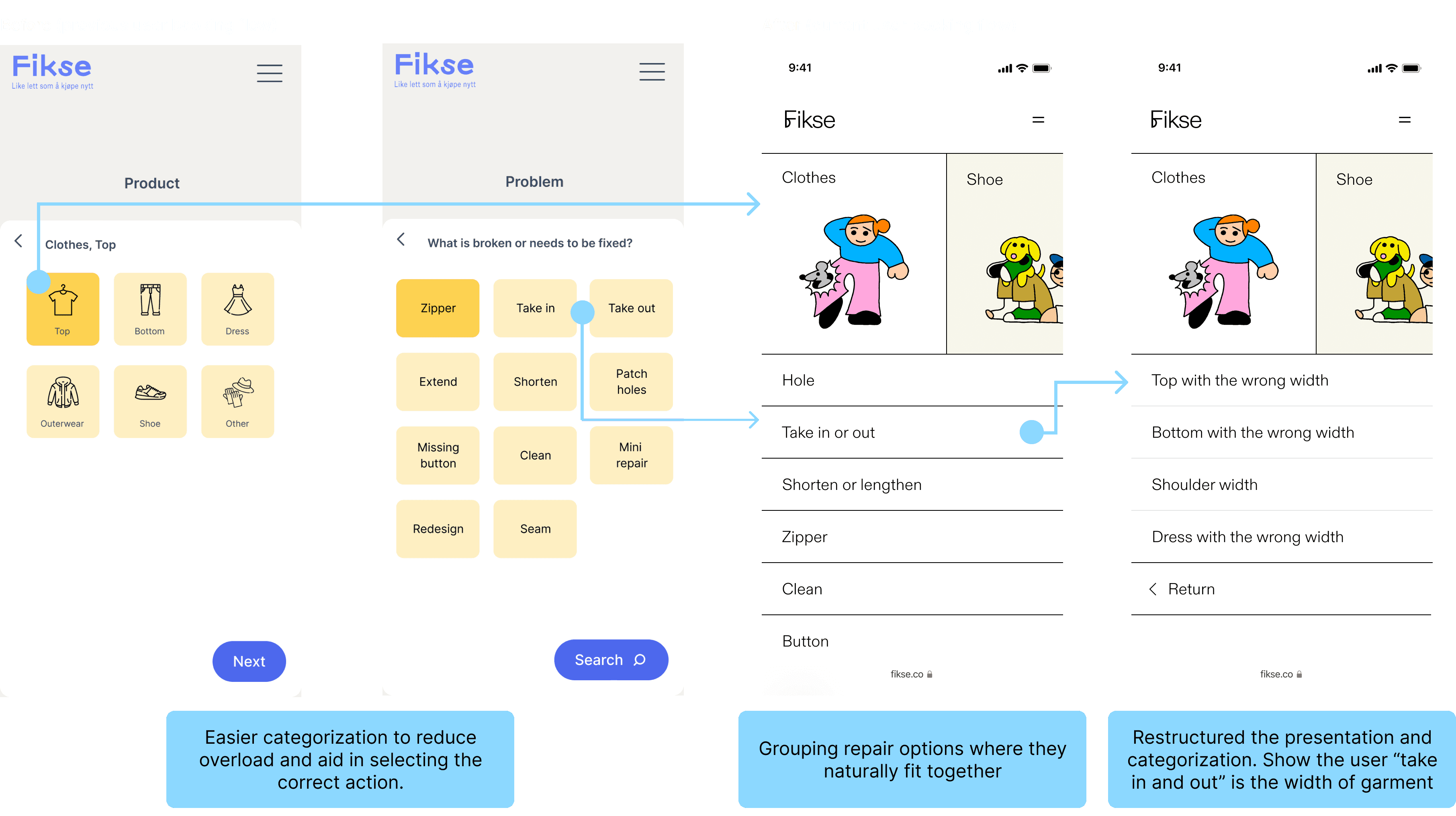
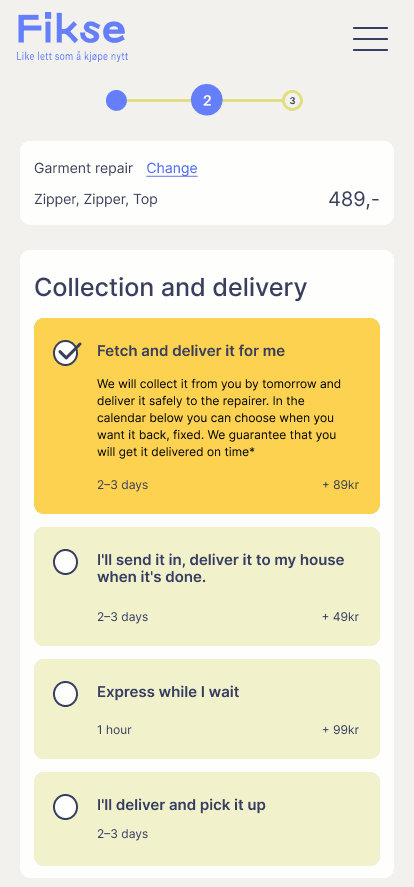
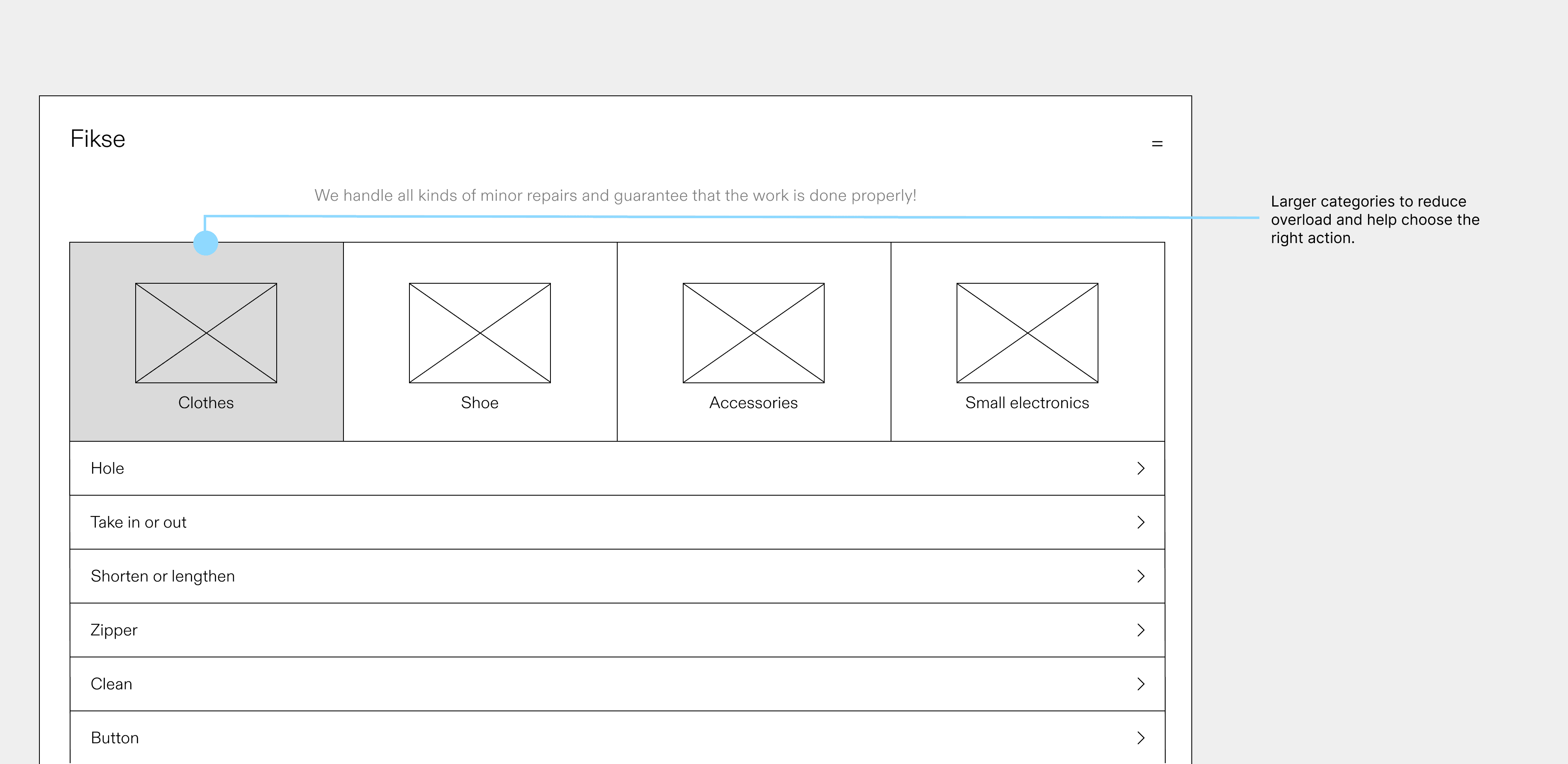
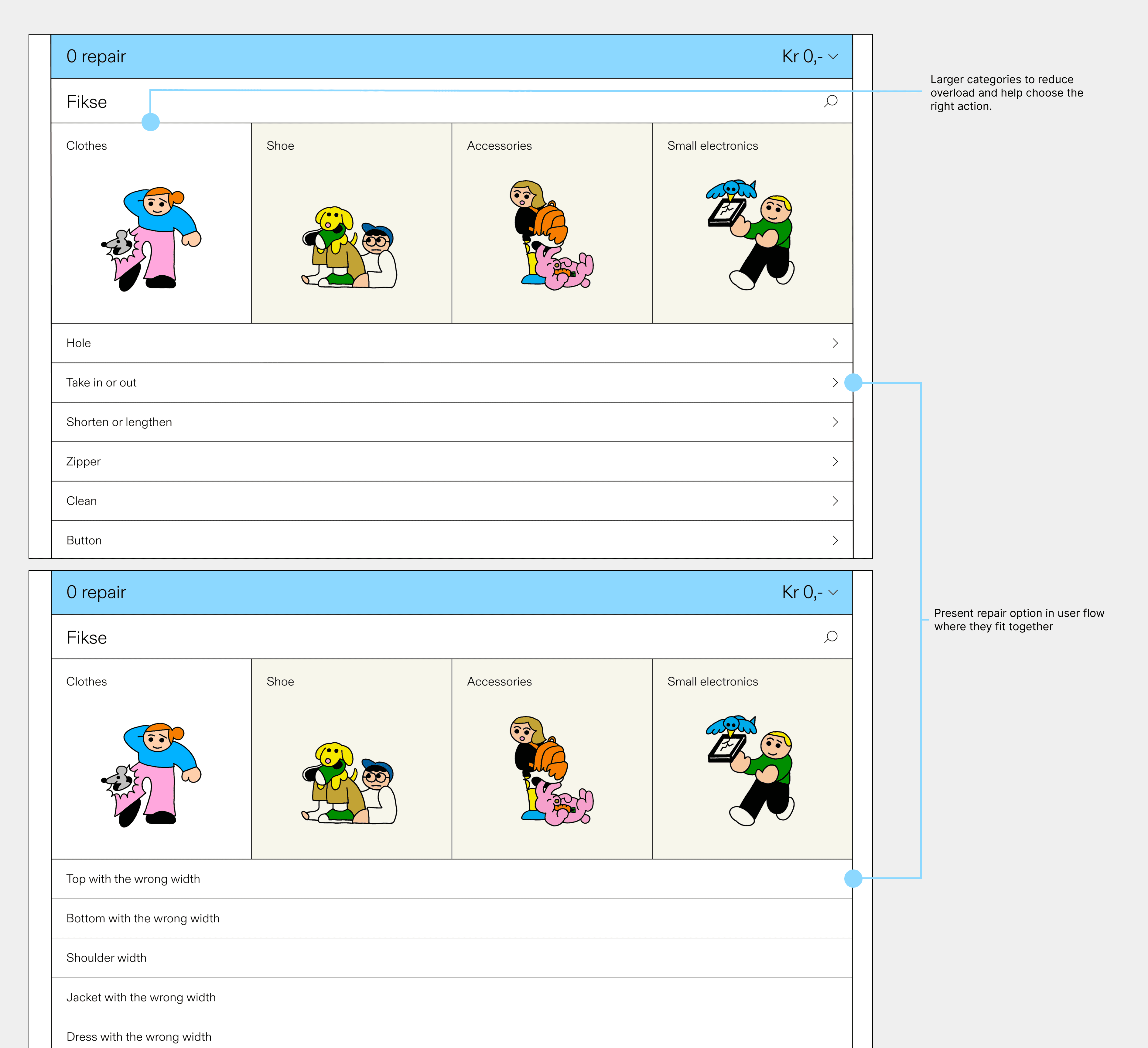
Restructured the presentation and categorization of information by grouping repair options where they naturally fit together. The "After" solution provide less 'information overload' and help users choose the correct repair option.
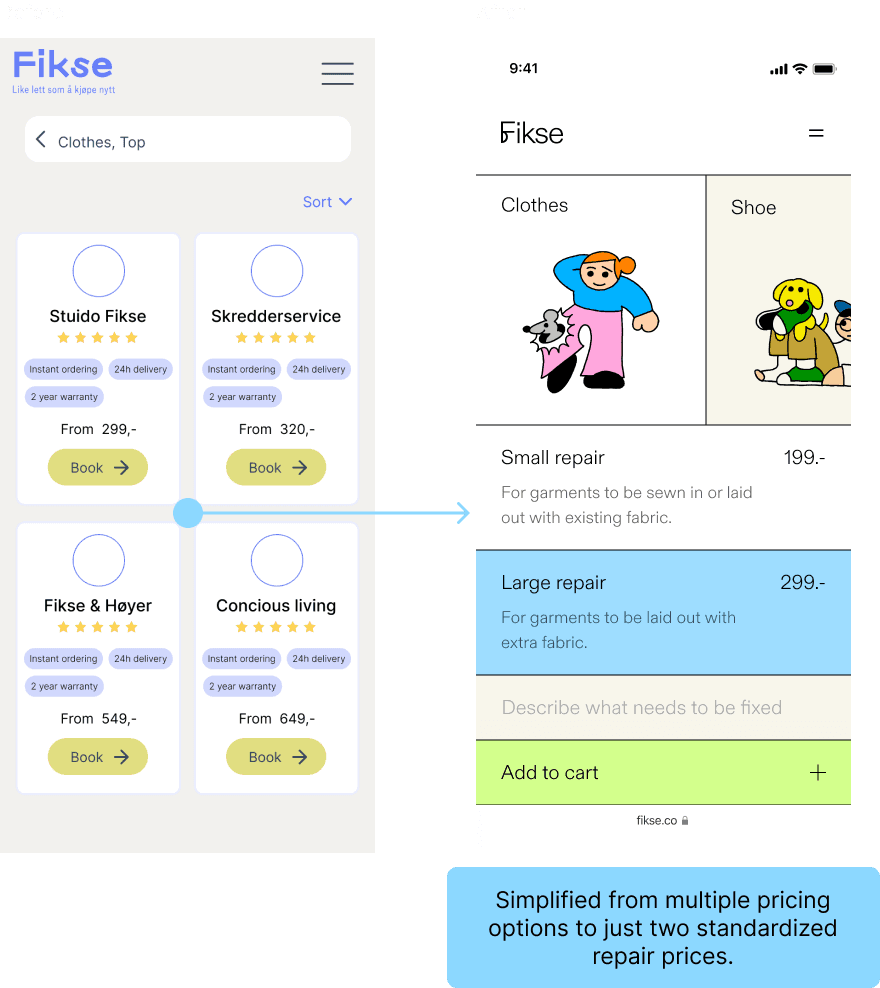
Standardized repair pricing
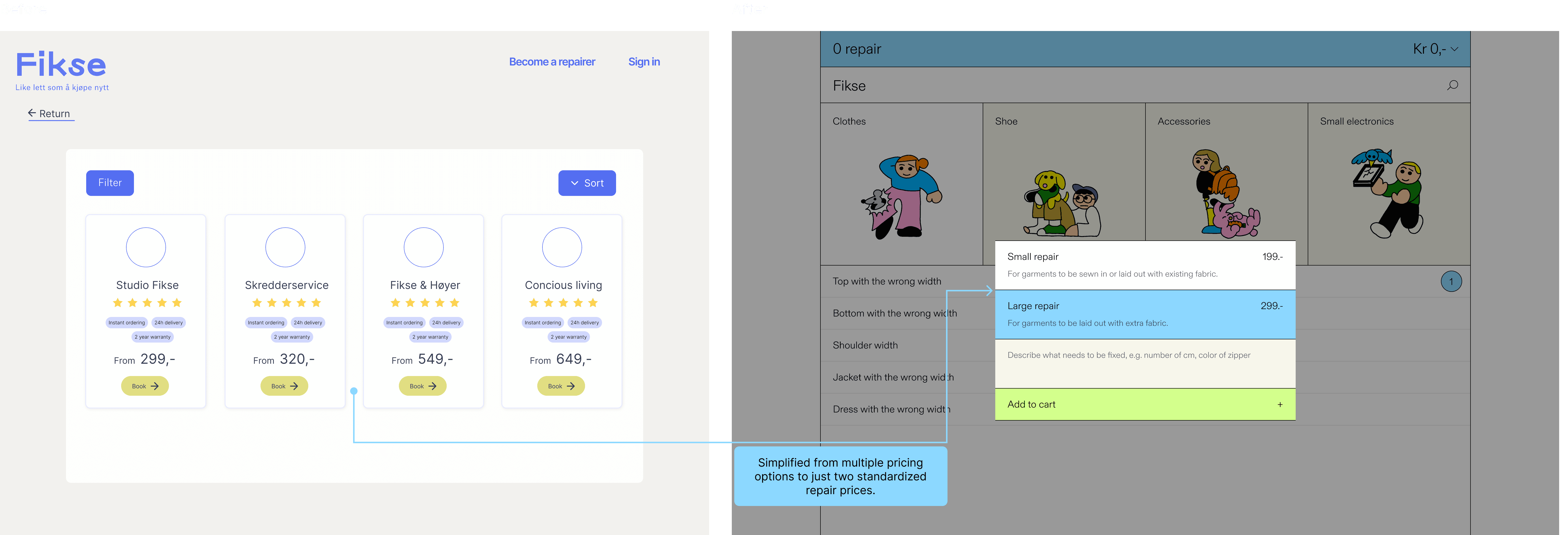
Implemented two standardized repair pricing with information about each repair and visual highlight for when selected.
Description of repair
Users can give a detailed description, specifying the relevant information about the isssue with the garment to the repairer.

Impact
Research
Research
To understand user experiences and identify pain points, we conducted interviews, workshops and evaluations with our users and product owners for detailed user insights.
Knowledge gaps in tailoring
among users
Improving User-Repairer Communication
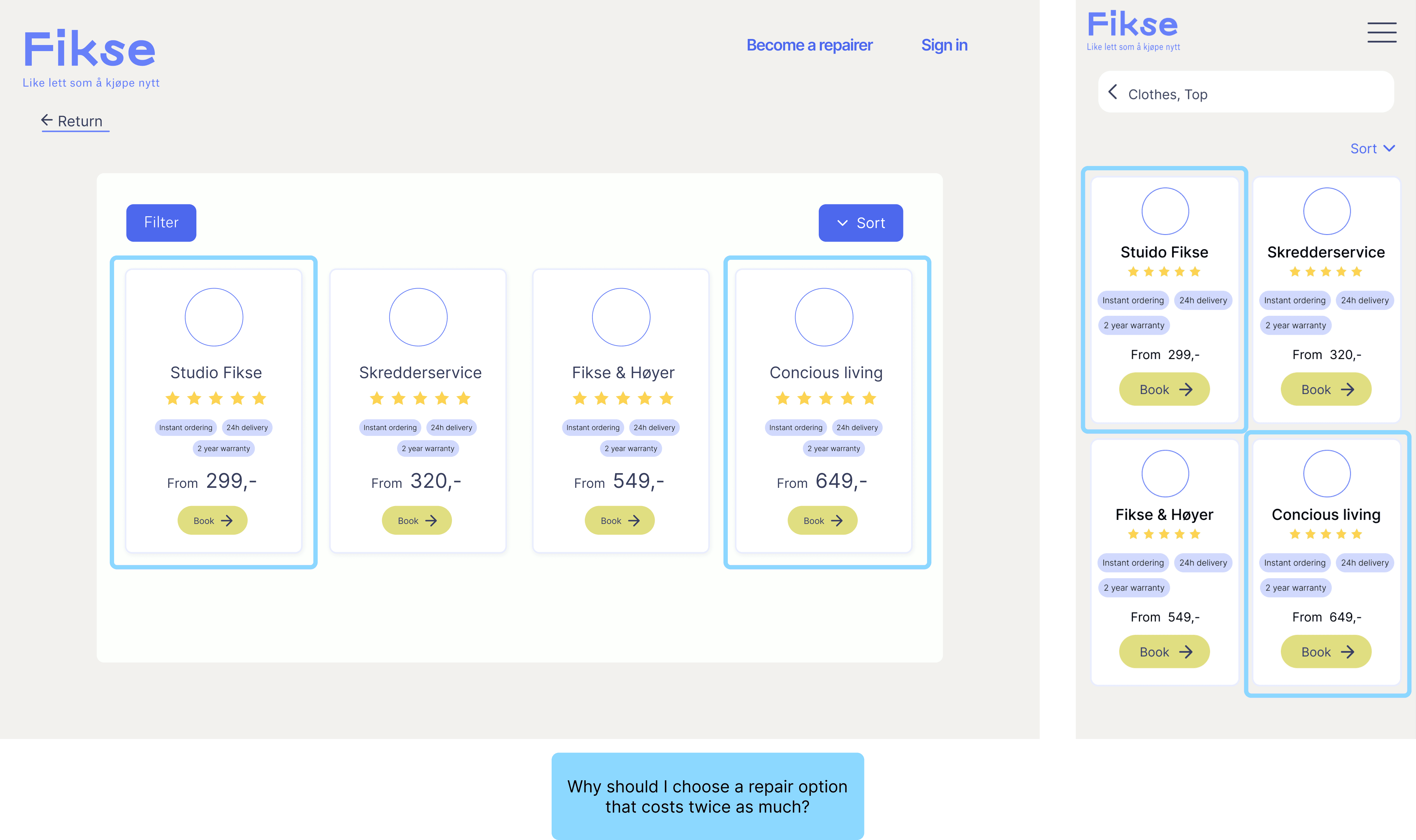
Multiple repair price options
Research findings
By starting with a research-intensive approach, we established a solid foundation for our work.
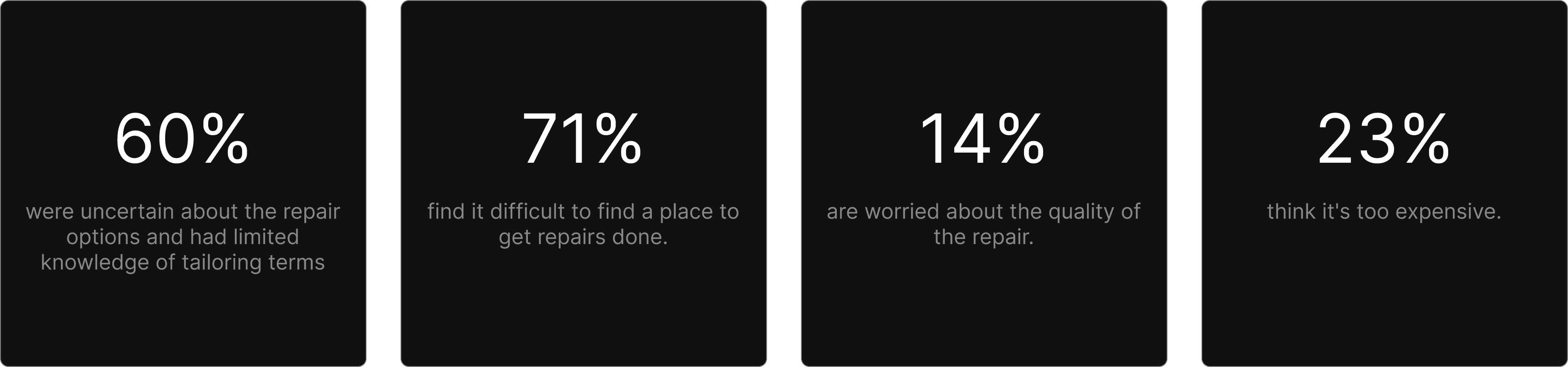
"I'm not familiar with tailoring at all, so I don't know which repair option I should choose."
"Quality is my main concern. I worry that cheaper repairs might mean sacrificing quality."
"Quality is my main concern. I worry that cheaper repairs might mean sacrificing quality."
Understanding our user base
Based on our research findings, we made user personas and identified the pain points and causes.
User persona: Frank

Frank, 30
Salesperson
Goals
Pain points
User persona: Markus

Markus, 27
Lawyer
Goals
Pain points
Pain points
Confusion over terminology
no pre-drop-off communication
Perceived complexity of process
Confusion regarding pricing
Causes
Limited exposure to tailoring
Overwhelming choice during booking
no option to describe repair order issue
Understanding tailor options
Too many unclear pricing options
The design process
User journey: Marie
Scenario
Marie, a real estate agent, recently noticed a tear in her favorite blazer just before a crucial client meeting.
Expectation
Seeks clear repair options on the Fikse platform to make confident repair choices.
Expects clear and efficient communication with tailors to ensure accurate and satisfactory repairs.
She prefers to mail the blazer due to her busy schedule.
Discovery of issue
Marie, a real estate agent, noticed a tear in her favorite blazer before a crucial client meeting. She opts for Fikse's online platform for their repair services.
Choose repair option
She visits Fikse's platform to choose a repair option but hesitates, unsure about the appropriate option for her issue—whether 'mini repair' or 'patching'.
Marie hesitated briefly before choosing 'patching'. However, she remained uncertain about whether it was the right choice and worried about potential cost implications.
Communicate repair
Marie wants to describe her blazer's complex tear during the booking process but lacks a feature to write her own description. This leaves her concerned about potential repair times and costs.
Uncertainty
Limited options
After thinking it over, Marie decides to visit the nearest Fikse tailor in person to discuss the repair details, opting not to make an online booking and paying.
Resolution, but a complicated process
At the tailor's shop, Marie explains her repair needs clearly, receives confirmation on the repair method and cost, and schedules the drop-off, ensuring her dress will be ready in time for the event.
Marie skipped using the Fikse platform and visited the tailor in person to discuss her issue and pay, adding extra effort and complexity to the process.
Sketching
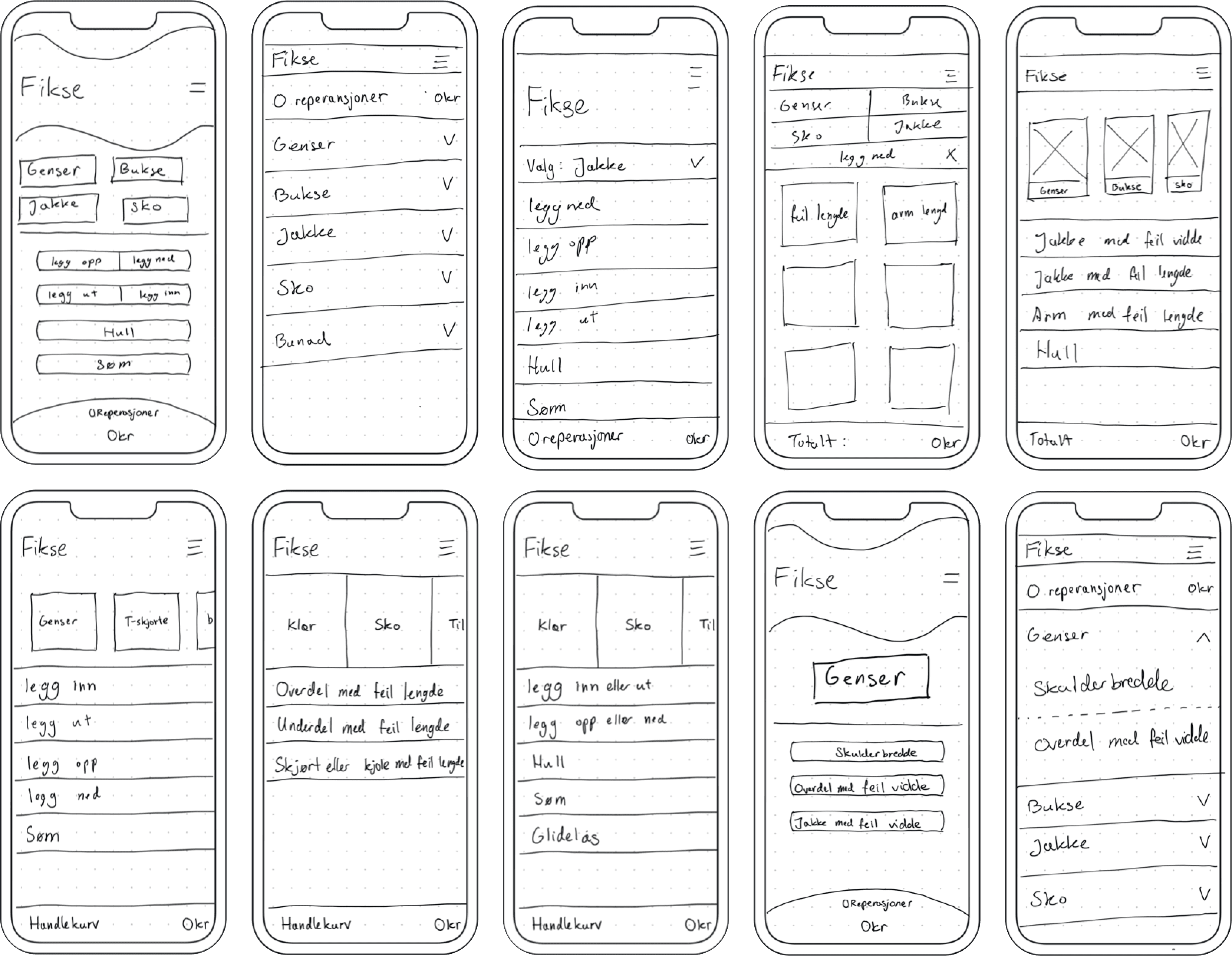
In this phase, the design team explored a variety of ideas and sketches, prioritizing creative diversity and avoiding tunnel vision. We embraced the principle of 'More is more,' fostering an environment of open contribution without premature criticism.
Prototyping
The design team brainstormed and created prototypes from the best concepts, transforming them into wireframes to visualize the user experience. This iterative approach allowed continuous adjustments to address user concerns and ensure an efficient and user-friendly solution.
Design Iteration 1
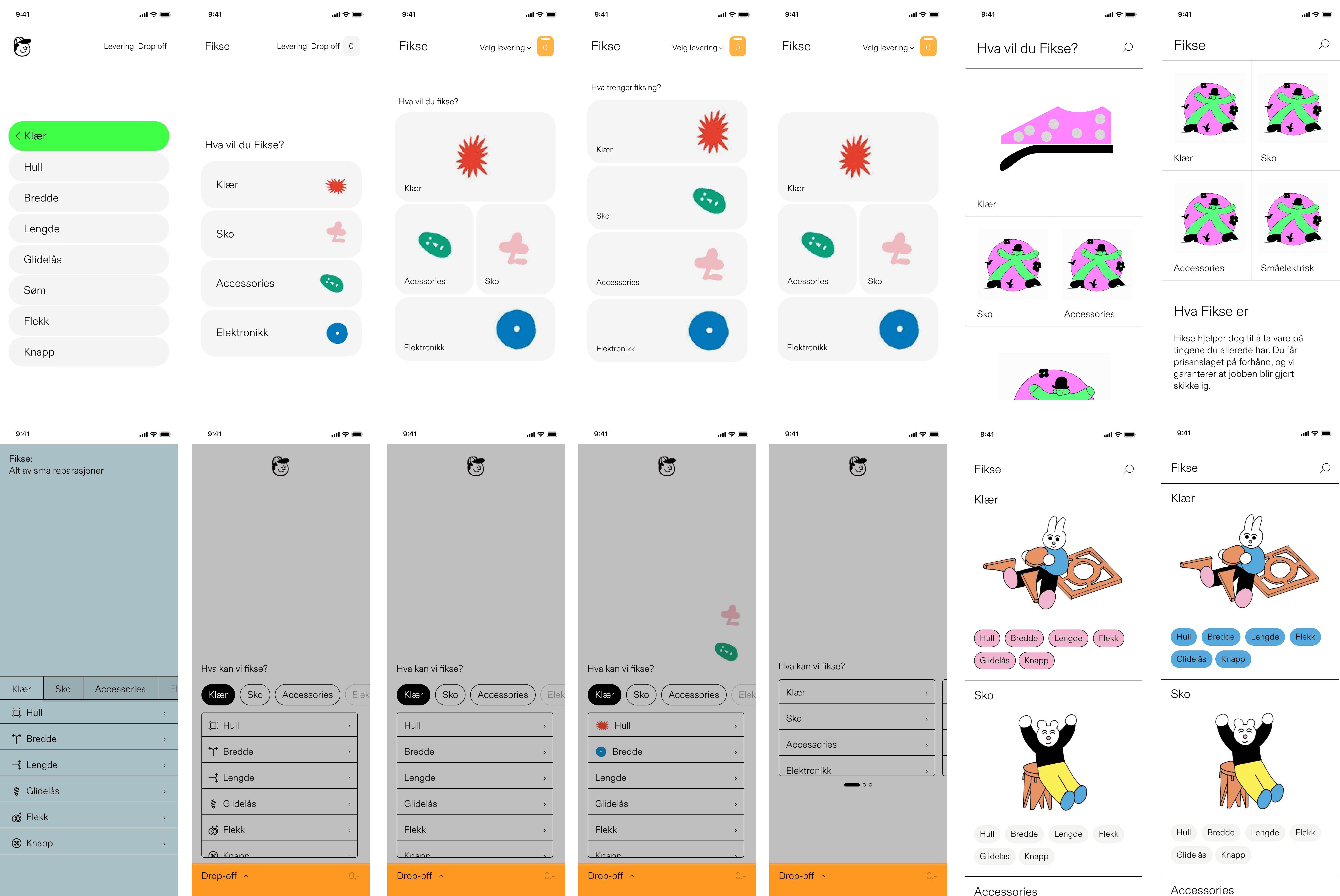
To figure out the best way to help users understand repair options, we did a workshop to develop an ideal user flow. It became clear that we needed to categorize to reduce overload, group repair options where they fit together, allowing users easily know what repair option suits their needs.

Original design
User flow left users unsure of the right repair option for their needs.

Iteration 1
Restructured the user flow to simplify choosing the right repair option.
Iteration 2
Upon sharing the initial design with designers, I identified the need for an improved hierarchy. We made the product section bigger but retained the same information architecture.
Final design
Once hierarchy was finalized, we iterated on a fun personality into the interface as the final design.
Design Iteration 2
To help users understand pricing options, we held a workshop with the Product Owner and our repair partners. We introduced two standardized pricing options based on repair size to clarify it's about size rather than quality, making it easier for users to choose the right repair service.
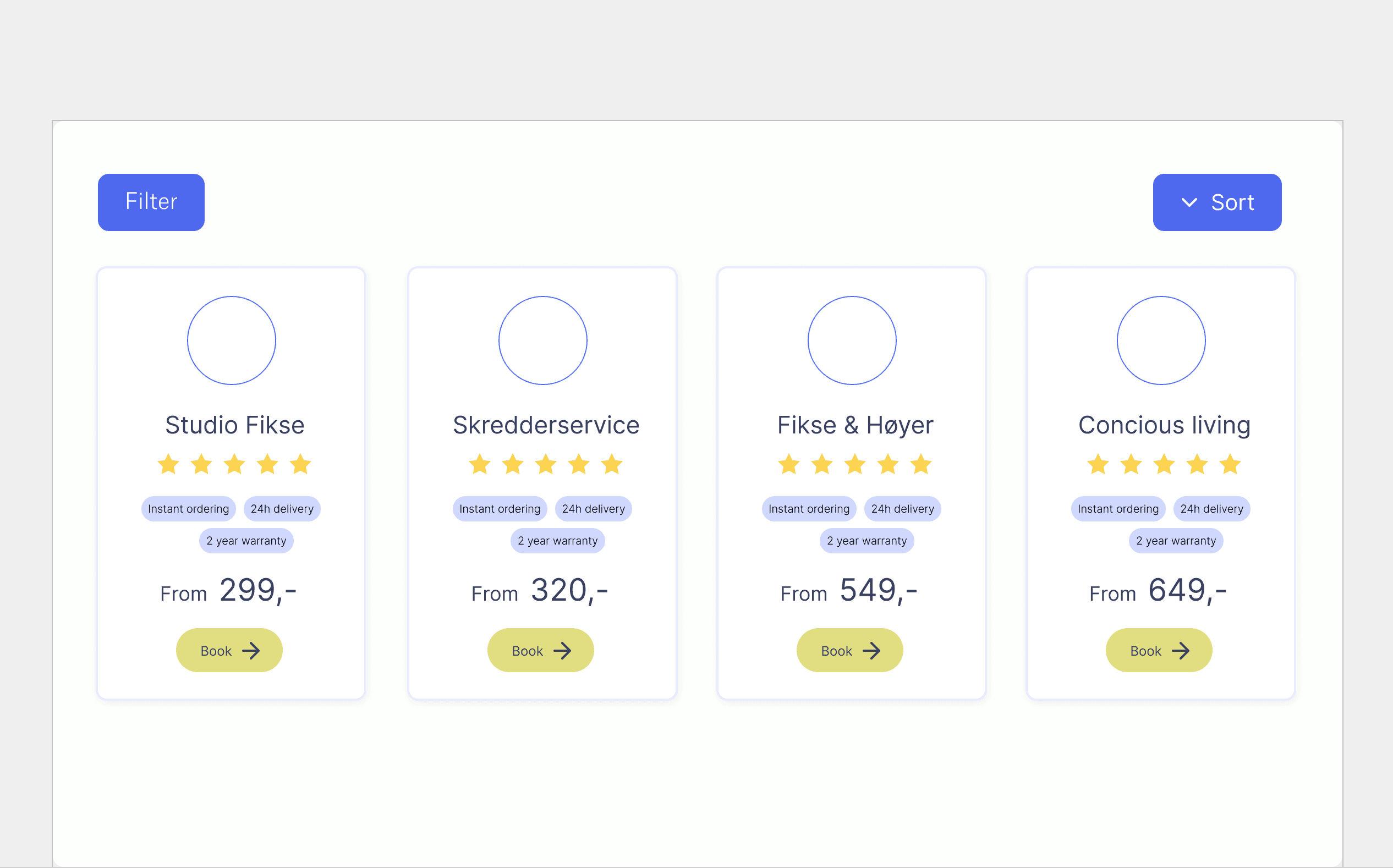
Original design
Five different pricing options. Users felt overwhelmed by the pricing options, perceiving them as expensive.
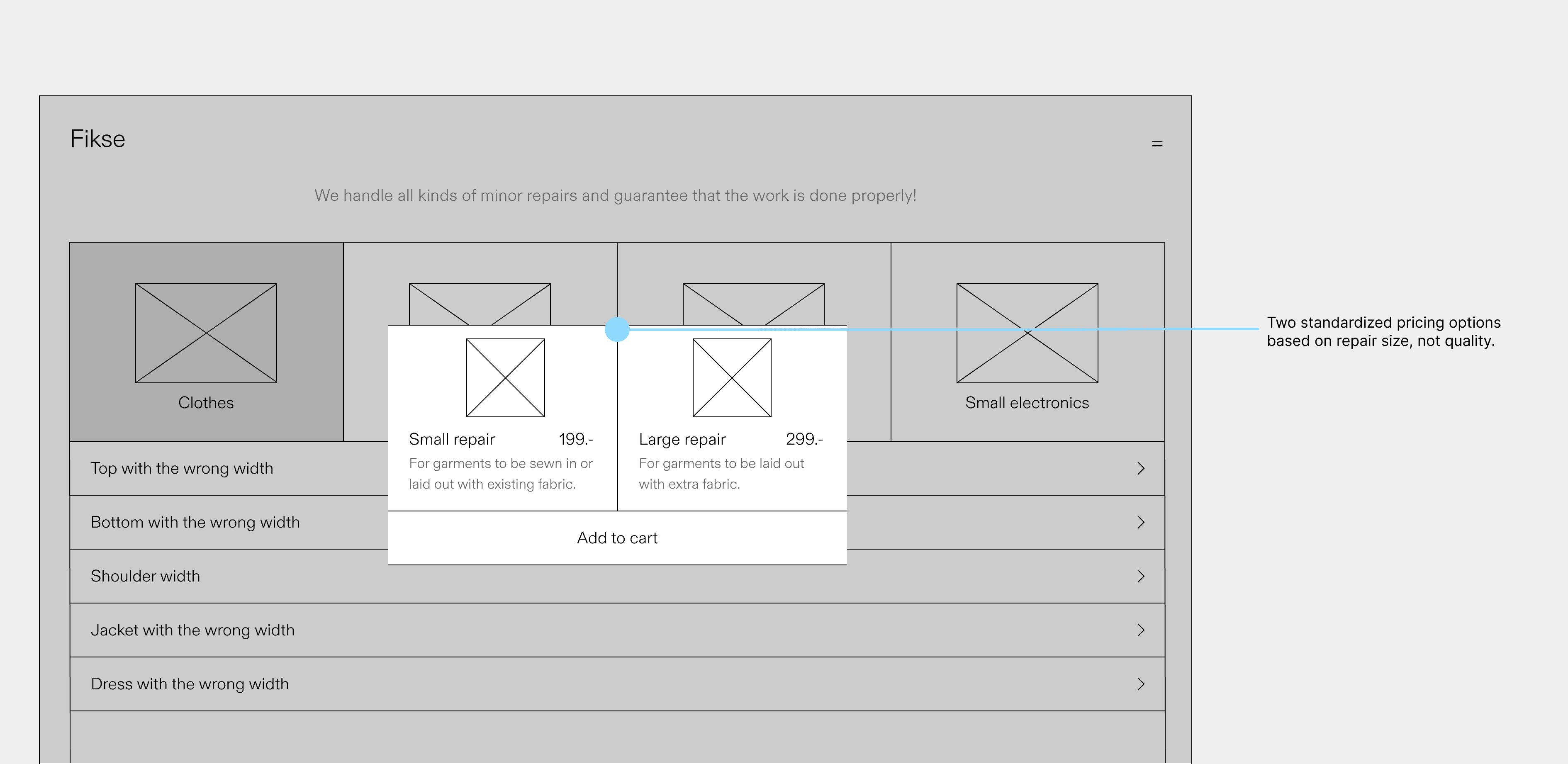
Iteration 1
Two standardized pricing options based on repair size rather than quality, simplifying user choice based on their needs.
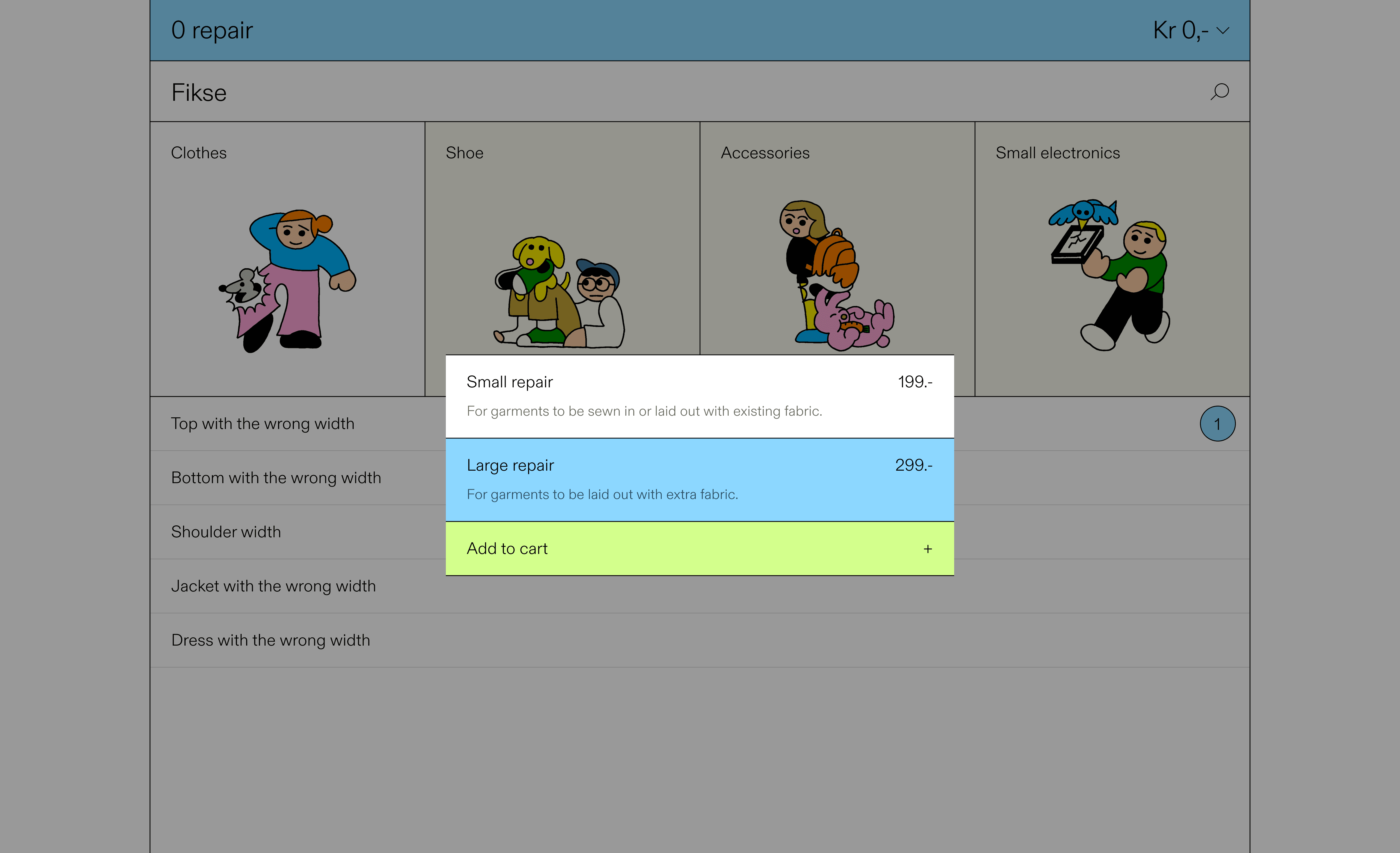
Final design
Simplified the hierarchy of the pricing options from iteration 1.
Design Iteration 3
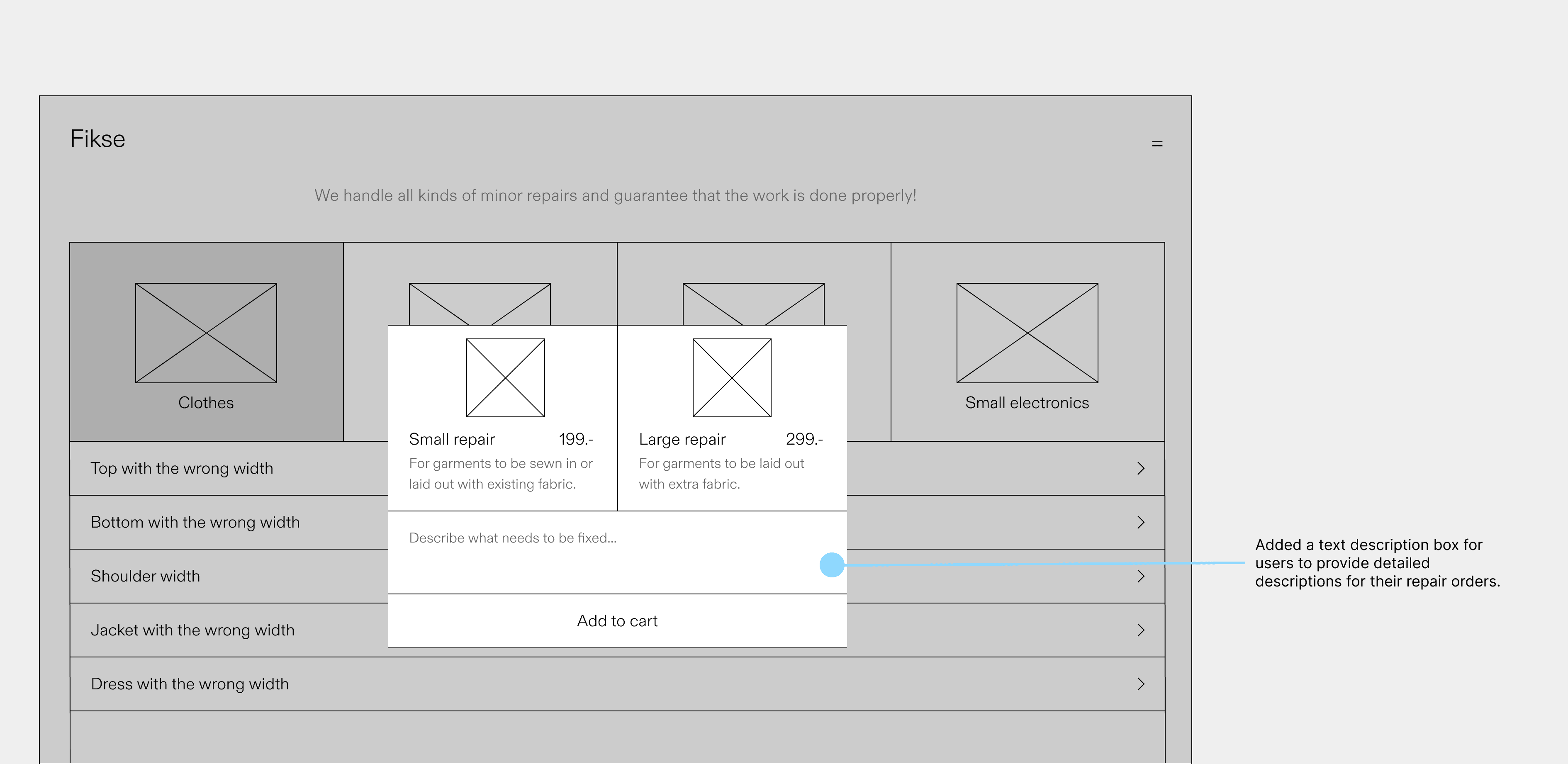
There was no user description box in the original design, so the design team added a text box for users to provide detailed descriptions for their repair orders.
Iteration 1
We iterated on the placement of the user description box in the user flow based on user testing, finalizing its placement when users choose a repair option.

Final design
Designed the user description box to align seamlessly with the design system.
User Testing
Process
Result
Yunus, 23
"I'm not familiar with tailoring, but the new layout and repair flow is so much easier to understand. Now I know exactly what to choose!"
Fredrikke, 26
"Quality is still my main concern, but now I'm much more confident in which price option to choose and what it entails."
Marthe, 25
"The new way you guys present the information and the order of it is so intuitive compared to before."
Hanna, 28
"This is a step in the right direction. I'm really picky about the details of the repair. In the future, maybe I can upload a pic or video?"
Future enhancement
Design Handoff
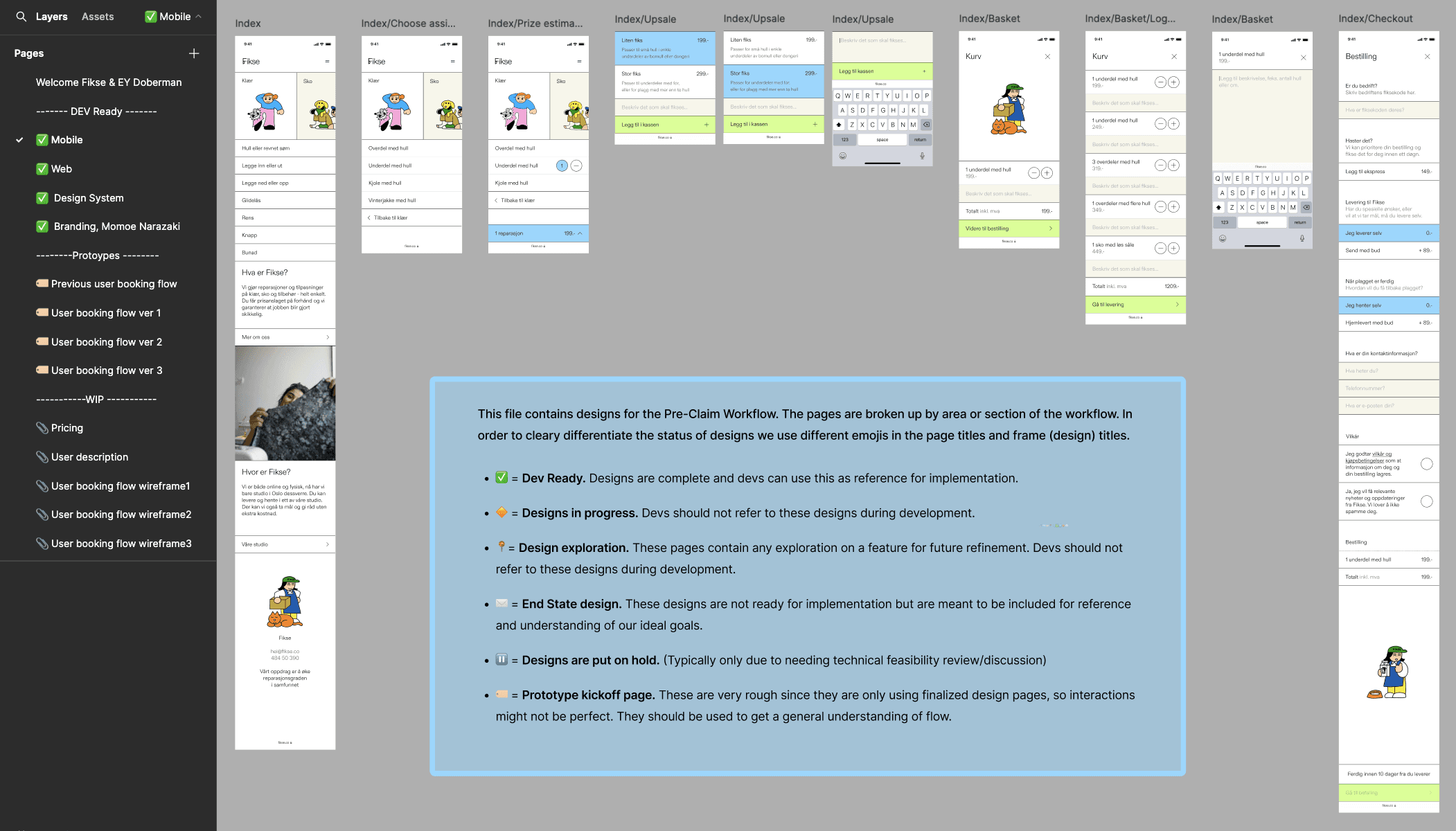
Handoff Figma file
I made separate Figma file for Devs and added a glossary explaining each Figma page. Additionally, I created a high-fidelity prototype to enhance communication efficiency.
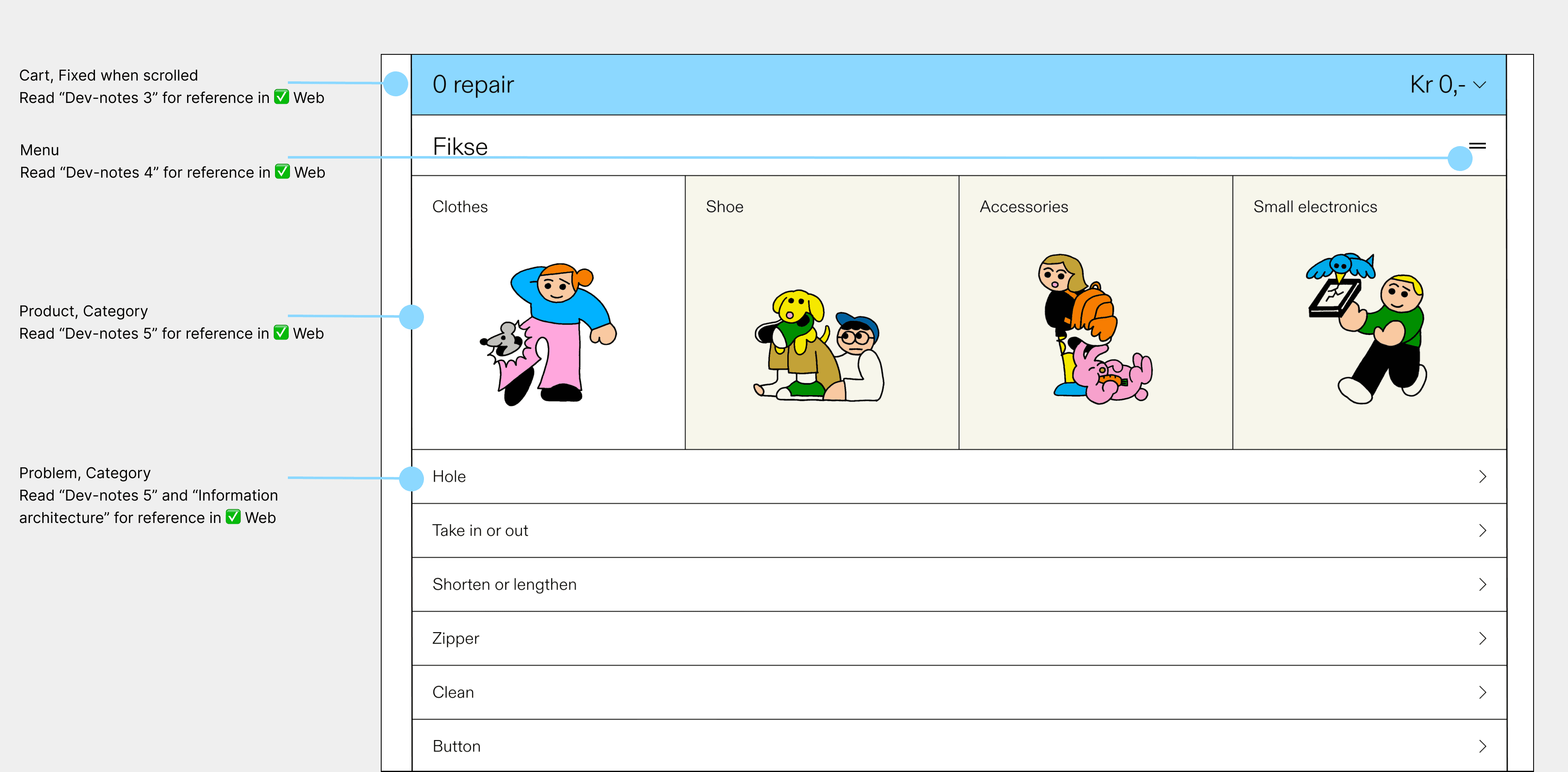
Annotation
I included detailed design notes to assist engineers in estimating the effort required for each feature and design element. Using our design system, I specified the components and styles in the "Dev Notes", along with their respective pages for easy reference.